


The Most Nostalgic Halloween Treats People Still Miss

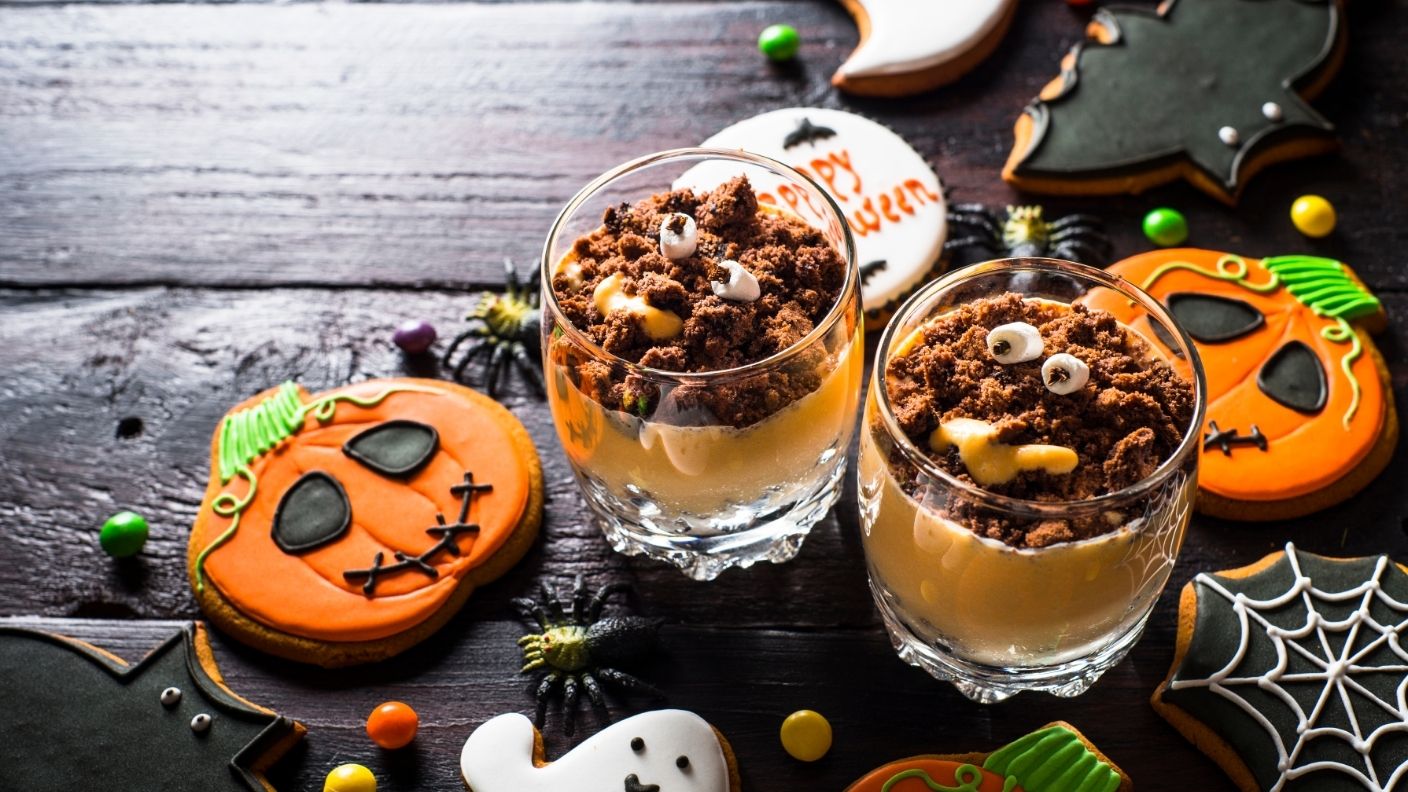

Trick-or-treat bags look fairly predictable these days, dominated by the same handful of mass-market chocolate bars year after year. That wasn’t always the case.
A few decades back, a Halloween haul was a lot stranger and a lot more regional, filled with things that have since quietly vanished from most store shelves. Here’s what actually disappeared, and why.
The Hard-Shell Candy Apple Lost Out to Its Softer Cousin
Long before caramel apples took over as the default fall treat, there was a different version with a hard, glassy red shell. A Newark candy maker named William Kolb stumbled onto the recipe in 1908 while experimenting with cinnamon candy for the Christmas season.
For decades afterward, the hard-shell version was the one actually handed out on Halloween night.
That changed hard in the 1970s, when scattered scares about tampered treats made parents deeply wary of anything homemade or unwrapped. Hard candy apples, impossible to inspect once coated, fell out of favor fast, leaving the softer caramel version to take over almost by default.
Chuckles Used to Be an Actual Household Name
Chuckles arrived in 1921, five jelly candies in a single tray, each one a different flavor and a different shape, cherry, lemon, lime, orange, and licorice. Fred Amend, the Chicago candy maker behind it, solved a real problem with his formula so the pieces stayed fresh without turning sticky.
That durability is exactly what made it a lunchbox and movie-theater staple for generations.
The candy still technically exists under Ferrara today, but the cultural footprint has shrunk considerably since the closure of a plant that once churned out two million pounds of it weekly. It’s the kind of candy people assume is discontinued simply because they haven’t seen it in a bowl in years.
Black Jack Gum Smelled Like Nothing Else in the Bag
Most gum in a Halloween haul today comes in fruit or mint flavors, which makes Black Jack gum feel like it’s from an entirely different era. Its licorice flavoring, added in 1884, gave it both its color and its name, decades before anyone was thinking about Halloween candy specifically.
That distinct anise flavor is exactly what eventually worked against it.
The gum hung on in stores until the 1970s, and later revival attempts in 1986 and 2019 never really caught on the same way. Licorice and black-colored candy simply stopped matching what most people wanted from a stick of gum, leaving Black Jack as something only vintage candy shops still carry.
Mallo Cups Came With Their Own Reward Program
A Mallo Cup is simple on paper, chocolate-covered marshmallow with a hint of coconut, but the Boyer brothers who invented it during the Great Depression built something clever around the wrapper itself. Each one contained a cardboard “coin” worth real value toward free candy.
Collecting ten dollars’ worth of those coins got a kid an entire case shipped to their door.
That reward system is part of why the candy stuck so hard in people’s memory, well beyond the taste alone. The company has changed hands since the Boyer family days, but the formula and the look of that bright yellow wrapper have barely moved, which is exactly why it still catches people off guard when they spot one.
Chick-O-Stick Almost Had an Entirely Different Name
Introduced in the 1950s by the Atkinson Candy Company, this crunchy orange-wrapped stick of peanut butter and toasted coconut was almost called something else entirely. The original name, Chicken Bones, had to be scrapped once the company discovered another candy maker already owned that trademark.
The rebrand turned out to be the right call.
Texture-wise, it lands somewhere close to a Butterfinger, crunchy and peanut-forward, but with a lighter, slightly tropical note from the coconut coating. It never disappeared completely, but it’s become rare enough in modern trick-or-treat bags that spotting one now reads as a genuine throwback.
None of these five actually got worse over time. They mostly lost out to safety concerns, shifting tastes, or simply getting crowded off the shelf by whatever chocolate bar had the bigger marketing budget that year.
RELATED ARTICLE: The Halloween Candy That Has Been Around Longer Than You’d Guess
