


Sea Salt vs Table Salt for Cooking: Does It Actually Matter?

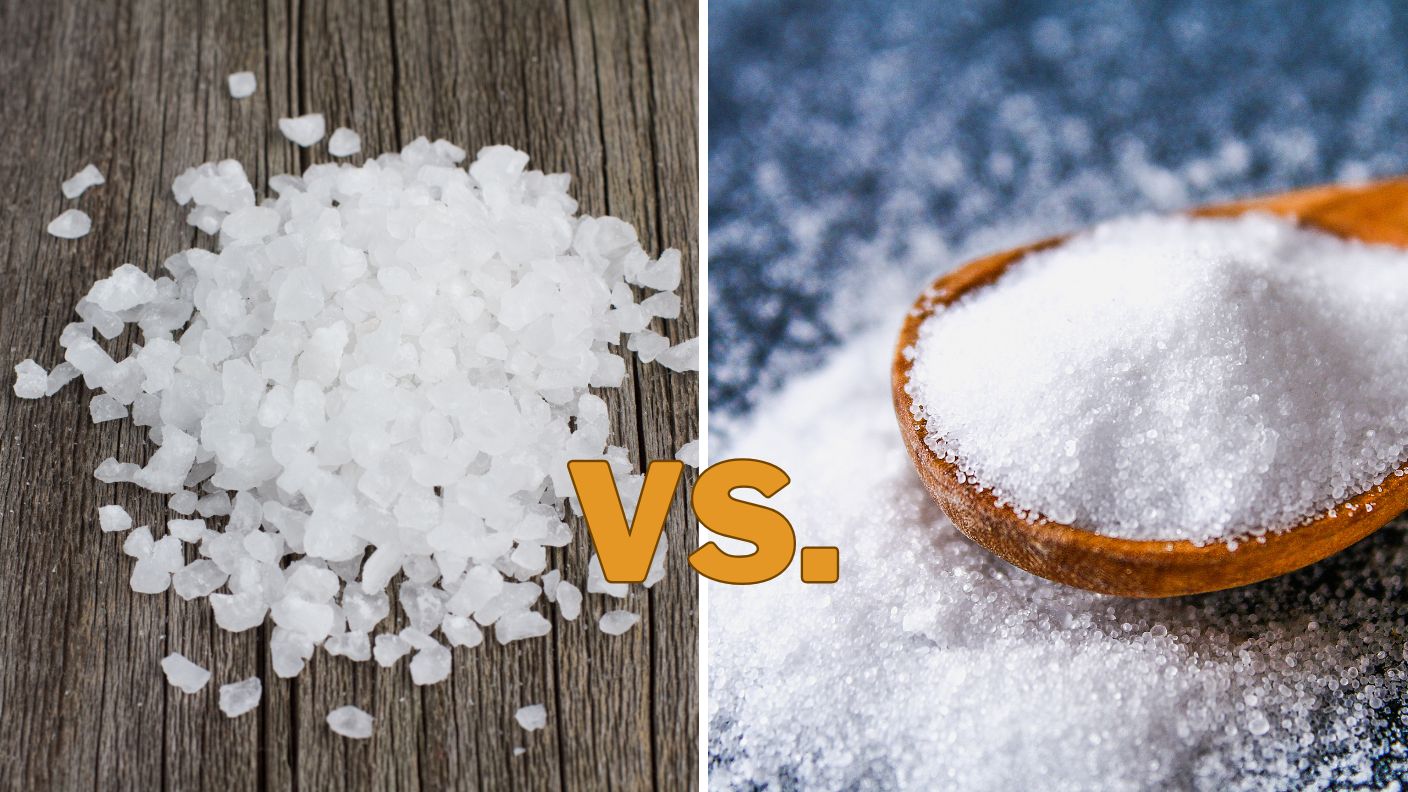

Most kitchens have at least one of them. Many have both. And almost nobody thinks too hard about which one they’re reaching for until a recipe starts going sideways and they can’t figure out why.
The question of sea salt versus table salt sounds simple. It isn’t, quite.
They Start the Same Way
Every grain of salt on earth came from the sea at some point. What separates sea salt from table salt is not the origin but the journey. Sea salt is produced through the evaporation of seawater, either by sun and wind over time or through industrial processes, and retains trace minerals like calcium, magnesium, and potassium that give it color and character.
Table salt is mined from underground deposits and then processed heavily to strip out impurities and minerals, leaving behind an almost pure sodium chloride in a fine, uniform grain. Most versions are then fortified with iodine and treated with anti-caking agents so it flows freely in any weather.
The Flavor Difference Is Real, But Subtle
This is where things get interesting. Because table salt is so finely ground and refined, it dissolves instantly on the tongue and can taste sharper or even slightly harsher than its less processed counterpart. Sea salt, with its irregular crystals and trace minerals, tends to deliver what experts describe as a cleaner, brinier, more complex flavor.
But here is the catch: once either salt dissolves into a dish, the difference in taste largely disappears. The minerals that give sea salt its character become negligible once they are heated and dispersed through a sauce or soup. The flavor distinction matters most at the surface, not inside the pot.
Texture Is Where Sea Salt Really Shines
The most meaningful difference between the two salts in a kitchen context is texture, and texture lives at the very end of cooking.
Sea salt comes in a range of crystal forms, from fine grains to large flakes, and flaky sea salt sprinkled just before serving provides a crunch and a burst of saltiness that no dissolved table salt can replicate.
Maldon, harvested from the Blackwater estuary in Essex, England, forms delicate pyramid-shaped crystals that chefs reach for as a finishing salt on everything from grilled meats to chocolate chip cookies.
Fleur de sel, hand-harvested from salt marshes along the French Atlantic coast, is moister and more briny, with a flavor that lingers longer on the palate because it dissolves more slowly. Both are far too expensive and delicate to be used for seasoning pasta water.
Table Salt Is the Right Choice for Baking
Here is where the practical difference between these two salts has real consequences. Table salt is finer and dissolves more easily, which allows for more precision in baking applications where exact measurements matter.
If a recipe calls for one teaspoon of salt and you use coarse sea salt instead, you are almost certainly using less sodium than intended, because larger crystals pack less densely into a measuring spoon.
A teaspoon of table salt contains around 2,360 mg of sodium, compared to roughly 2,000 mg in a teaspoon of sea salt, purely because the bigger sea salt crystals leave more air space. That difference matters in a loaf of bread. It matters less in a roasted chicken.
The Health Angle Is Mostly a Marketing Story
Sea salt is often promoted as a healthier alternative to table salt, but the American Heart Association is clear on this: sea salt and table salt have the same basic nutritional value and comparable amounts of sodium by weight.
The trace minerals in sea salt are present in amounts too small to have any meaningful nutritional impact, and eating enough sea salt to get significant calcium or magnesium from it would require a level of sodium intake that would cause its own problems.
The one genuine nutritional advantage table salt carries is iodine. Iodine is a crucial mineral for thyroid function, and for people who do not consume much seafood or dairy, iodized table salt can be an important source of it. Most sea salts contain little to no iodine.
Which One Should You Actually Use?
The honest answer is that both have a place, and neither is universally superior. Dietitian Amy Davis puts it plainly: table salt gets a bad reputation that is not really warranted from a health perspective.
It is reliable, precise, and works well for seasoning during cooking and in baking where consistency matters.
Sea salt earns its place as a finishing element, not necessarily a cooking one. A pinch of flaky Maldon over a roasted piece of fish, a scatter of crystals over warm chocolate chip cookies, a few flakes pressed into the crust of a steak before it hits the plate — these are moments where the texture and visual beauty of sea salt make a genuine, noticeable difference.
As Ina Garten has said about salt more broadly, the problem is not which salt people choose, it is that most people use it wrong. Season confidently during cooking, finish thoughtfully at the end, and you will get more out of whichever salt is sitting on your counter.
RELATED ARTICLE: Why Your “Healthy” Meals Aren’t Mediterranean Enough
