


Box Cake Mix Baking Times by Pan Size

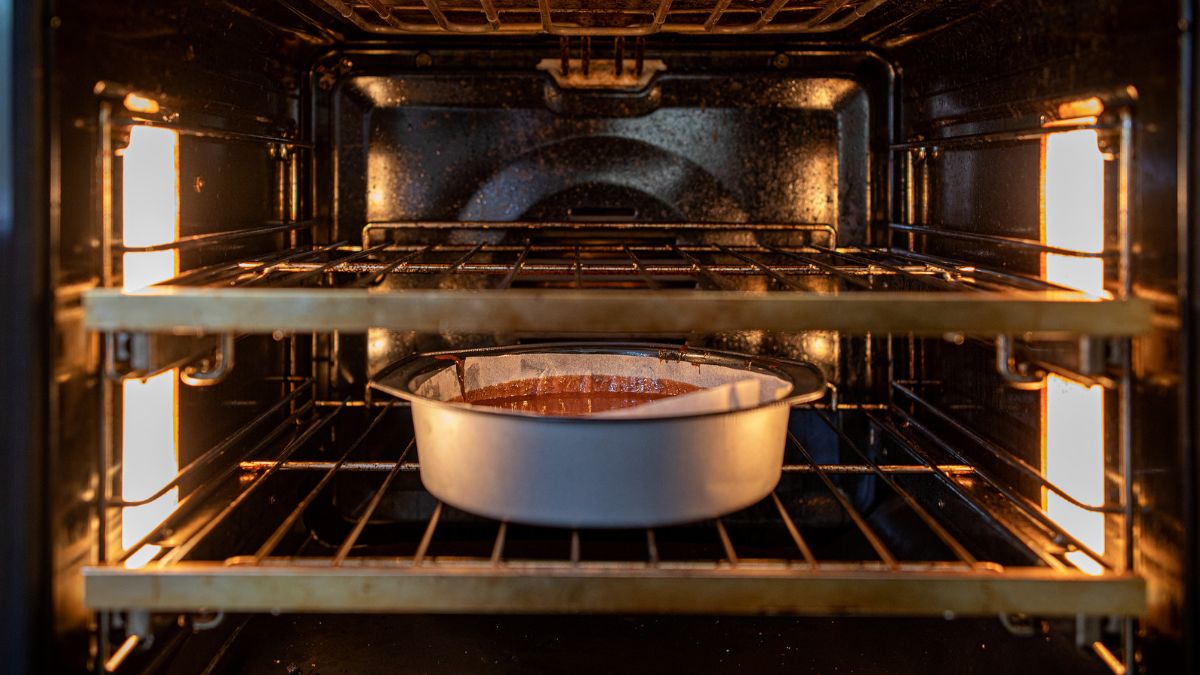
Every major box cake mix bakes at 350°F. What changes from pan to pan is the time, which runs from about 14 minutes for cupcakes to about 43 minutes for a Bundt. The chart below lists the times printed on Betty Crocker, Duncan Hines and Pillsbury boxes, followed by how to handle pans the box doesn’t list.
If you want the box to taste better too, start with these tips for making a box cake mix taste better. Then come back here for the timing.
Cake mix baking times by pan size (chart)
These baking times come from each brand’s yellow cake mix directions and apply to one box baked in metal pans at 350°F. Other flavors from the same brand are usually within a few minutes. Start checking at the low number.
| Pan | Betty Crocker Super Moist (13.25 oz) | Duncan Hines Perfectly Moist (15.25 oz) | Pillsbury Moist Supreme (15.2 oz) |
|---|---|---|---|
| 13×9-inch | 24 to 29 min | 23 to 28 min | 30 to 38 min |
| Two 8-inch rounds | 24 to 29 min | 24 to 28 min | 34 to 38 min |
| Two 9-inch rounds | 20 to 25 min | 23 to 28 min | 29 to 33 min |
| Bundt | 34 to 39 min | 33 to 36 min | 39 to 43 min |
| 24 cupcakes | 14 to 18 min | 18 to 21 min | 19 to 23 min |
Betty Crocker’s box is now 13.25 oz, while Duncan Hines and Pillsbury are still about 15.25 oz. The smaller box makes a slightly thinner cake, which is part of why its times run shorter. If your box shows a different weight or chart, follow the box. You can also check the Betty Crocker yellow cake mix instructions and chocolate cake mix instructions for the full method.
Pans the box doesn’t list
The box charts stop at five pans. For other pans, the estimates below are based on each pan’s area compared with a 13×9-inch pan (117 square inches), with the batter amount adjusted to keep the depth about the same.
| Pan | How much mix | Where to start checking |
|---|---|---|
| 8×8-inch square | About half a box | Low end of the 13×9 time |
| 9×9-inch square | About two-thirds of a box | Low end of the 13×9 time |
| 9-inch springform | About half a box | 9-inch round time |
| Two 9×5-inch loaf pans | One box, split | High end of the 13×9 time, then every 5 min |
| Half sheet (18×13) | Two boxes | Low end of the 13×9 time |
| Mini cupcakes | One box makes 60 or more | Halfway through the cupcake time, then every 2 min |
Use leftover batter for a few cupcakes rather than overfilling the pan.
Why the same box bakes faster or slower in different pans
The mix is the same in every pan. What changes is how far the heat has to travel to reach the middle of the batter.
Batter depth matters more than pan size
A cake bakes from the outside in. Spread one box across a 13×9 and the batter is shallow, so the center sets quickly. Pour the same box into a Bundt and it sits much deeper, which is why the Bundt takes about 5 to 10 minutes longer than the 13×9 on every box in the chart.
The flip side is cupcakes: each one holds only a few tablespoons of batter, so they’re done in under 20 minutes.
Glass, dark and light metal pans
Light-colored aluminum pans are what the box times assume. Dark nonstick pans absorb more heat and brown the edges faster. Glass heats slowly but holds heat longer, so the edges keep cooking after the center looks underdone.
If your box gives directions for dark or glass pans, use those. If it doesn’t, a common fix is to lower the oven by 25°F and start checking a few minutes early. For more on glass, see baking in a glass pan.
Convection ovens
A fan moves hot air across the batter and speeds up baking. If you use the convection setting, lower the oven by 25°F and start checking about 5 minutes before the low end of the box time. A strong fan can tilt the top of the batter, so cakes often bake more evenly on the regular bake setting.
Using a pan that isn’t on the box
The trick is to match the batter depth you’d get in a pan the box does list. Keep the depth about the same and the bake time stays close to the box time.
Using a pan that isn’t on the box? Enter your pan and the one on the box into this baking pan conversion calculator to see how much batter to use and roughly how much to change the bake time. It handles square, rectangle, round, Bundt, loaf, springform and muffin pans.
If you’d rather do the math yourself, compare the pans’ areas:
- Rectangles and squares: length x width. A 13×9 is 117 square inches. An 8×8 is 64, a little over half.
- Rounds: 3.14 x radius x radius. An 8-inch round is about 50 square inches and a 9-inch round about 64, so two 9-inch rounds hold slightly more than a 13×9.
An 8×8 holds about half the batter of a 13×9. Fill it with half a box and bake it close to the 13×9 time. Pour the whole box into that 8×8 and you’ve nearly doubled the depth, so the edges will dry out before the middle sets.
How full to fill any pan
Fill cake pans about halfway, and never more than two-thirds full. Cupcake liners take half to two-thirds. Bundt pans need more room at the top, which is covered below. Anything fuller risks batter spilling over the rim and a center that stays raw.
Bundt and tube pans
One box fits a standard 10- or 12-cup Bundt pan and bakes in about 33 to 43 minutes at 350°F, depending on the brand.
A Bundt pan’s capacity in cups tells you how much it holds when filled to the brim, rather than how much batter you should use. King Arthur puts the usable capacity of a 10-cup pan at about 6 cups and says the batter should sit at least 1 1/4 inches below the rim (King Arthur). One box of mix lands right around that amount.
Three things matter most:
- Grease every ridge. Use shortening or baking spray with flour and a pastry brush, and get into every groove and around the center tube. Most stuck Bundts come from one missed spot.
- Test near the tube, not the edge. Insert the toothpick halfway between the outer wall and the center tube, where the batter is deepest.
- Cool 10 to 15 minutes, then turn it out. Pillsbury calls for 10 to 15 minutes in the pan and Duncan Hines for 15. Turning it out while it’s still warm gives it the best chance of releasing cleanly.
No Bundt pan? The same tricks used for monkey bread without a Bundt pan work for cake, or bake the box in a 13×9 instead.
Cupcakes and mini cupcakes from one box
According to all three brands’ directions, one box makes 24 standard cupcakes that bake at 350°F for about 14 to 23 minutes.
- Fill each liner half to two-thirds full. Pillsbury’s directions say half full and Betty Crocker’s cupcake guide says about two-thirds. A cookie scoop makes every cupcake the same size, so they all finish at the same time.
- Rotate the tin halfway through if your oven has a hot spot. The cupcakes at the back often finish first.
- Check the middle cupcake. It’s the slowest to bake. When a toothpick comes out clean from that one, the whole tray is done.
Mini cupcakes
Minis take about a tablespoon of batter each, and one box makes 60 or more. None of the three boxes prints a mini time, so start checking about halfway through the standard cupcake time and every 2 minutes after that. They go from done to dry fast, so stay close to the oven.
Sheet pans and doubling a box
A half sheet pan (18×13 inches) has twice the area of a 13×9, so it takes two boxes of mix. At that amount the batter sits at the same depth as one box in a 13×9, so start checking at the low end of the 13×9 time.
A few things change at sheet-pan size:
- Mix the boxes in a big bowl. Most hand mixers handle two boxes fine. Overloading a small bowl leaves dry pockets at the bottom.
- Mind the rim. Half sheets are usually only 1 inch deep. Two boxes fill one a little over halfway, which is fine. A third box would overflow.
- Check the center and the corners. In a big pan, the corners set first. The cake is done when the center passes the toothpick test.
Doubling in a deeper pan works differently. Using two boxes of mix in one 13×9-inch pan doubles the batter depth and greatly increases the baking time, leaving the edges well done before the center sets. If you need more cake, two 13×9 pans side by side are the more reliable route. For a closer look at the double-batch math with brownies, see doubling a box mix.
Round and loaf pans
8-inch vs 9-inch rounds
One box makes two layers in either size. Two 9-inch rounds give you wider, thinner layers that bake faster. Two 8-inch rounds give you taller layers that take a few minutes longer, which is why Betty Crocker lists 24 to 29 minutes for 8-inch rounds and 20 to 25 for 9-inch.
Put both pans on the same rack with space between them and the oven walls. If they won’t fit side by side, put them on separate racks, offset so one isn’t directly above the other, and swap them halfway through.
One deep round isn’t a good swap for two layers. A whole box in a single 9-inch round doubles the depth, so the outside dries out before the middle bakes. If you only have one round pan, bake the layers one after the other. Baking a mix in a round pan follows the same rules for brownies as it does for cake.
Loaf pans
One box fills two 9×5 loaf pans. The batter in each loaf sits deeper than in a 13×9, so expect it to take longer: start checking at the high end of the 13×9 time and every 5 minutes after. The top will dome and may crack down the middle, which is normal for a loaf.
If the top browns before the center is done, lay a sheet of foil loosely over it. For smaller loaves, these mini loaf pan cakes are a good place to start.
How to tell when a box cake is done
All three brands recommend the same test for doneness: insert a toothpick into the center of the cake and check that it comes out clean. Check these too:
- The top springs back. Press lightly in the center. If the dent stays, give it a few more minutes.
- The edges pull away. A cake that’s done starts to shrink from the sides of the pan.
- The top looks set and lightly golden. Wet, shiny patches in the middle mean the cake needs more time.
Check at the low end of the box time, then every 2 to 3 minutes. Opening the door too early lets heat out and can make the center sink, so wait until at least the low end of the range.
Done on the edges, raw in the middle
This usually means the batter is too deep for the pan or the oven is running hot. For the next bake:
- Spread the batter into a wider pan, or use less of it, so it sits at about the depth the box expects.
- Lower the oven by 25°F and bake a little longer, so the center catches up before the edges overbake.
- For deep pans, put a heating core or an upside-down metal flower nail in the center to carry heat into the middle.
For the cake already in the oven, lay a sheet of foil loosely over the top and keep baking until the center tests done.
FAQ
Is one box of cake mix enough for a 9×13 pan?
Yes. Every major brand’s box is sized for one 13×9 cake, and that’s the first pan on each box’s chart. Two boxes in one 13×9 is too much batter for an even bake.
How many cupcakes does one box of cake mix make?
One box makes 24 standard cupcakes on Betty Crocker, Duncan Hines and Pillsbury directions. It makes 60 or more mini cupcakes.
Do you lower the temperature for a glass pan?
Often, yes. Follow any glass-pan directions on your box first. If there are none, lowering the oven by 25°F and checking a few minutes early keeps the edges from overbaking.
How full should a cake pan be?
Fill cake pans about halfway and never more than two-thirds full. Leave at least 1 1/4 inches of space at the top of a Bundt pan.
Can I bake cake mix in a pie pan?
Yes, but a pie pan’s sloped sides give you a thinner, wider cake with crisp edges. Use about half a box, start checking at the low end of the 9-inch round time, and see pie pans vs cake pans for the differences.
