


Butter vs Avocado for Toast — Nutritionists Finally Pick a Side

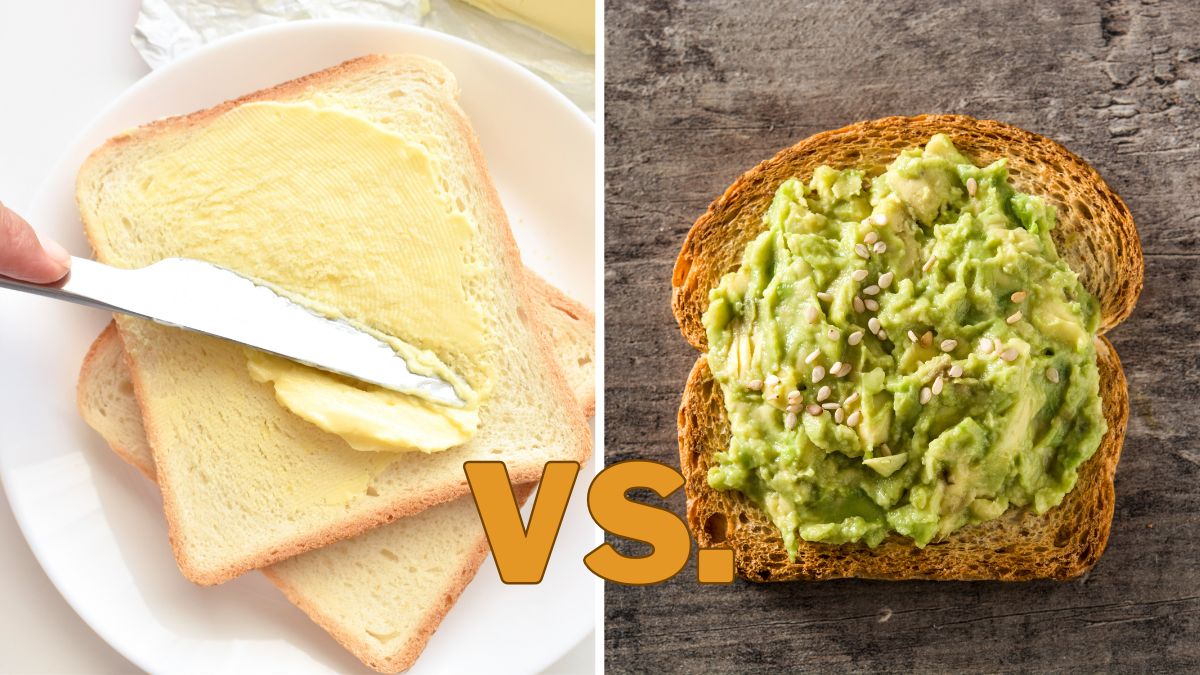

It is the most debated breakfast decision of the decade. One spread has centuries of tradition behind it. The other has a million Instagram posts. But if you are reaching for one every morning without thinking about what it actually does, the science might surprise you.
This is not about demonizing either option. It is about understanding what each one brings to your plate, and which one earns a permanent spot on your morning toast.
What Butter Actually Does
Butter is delicious, and there is no science that says a little of it will hurt you. The American Heart Association notes that a little butter on your toast, in the context of an otherwise healthy diet, should not pose a major risk. It provides fat-soluble vitamins A, D, E and K, and has a rich flavor that most people find genuinely satisfying.
The complication is the saturated fat. The American Heart Association is direct about this: eating too much saturated fat raises LDL cholesterol levels, and elevated LDL increases the risk of heart disease and stroke.
One tablespoon of butter contains around 7 grams of saturated fat, which is a meaningful portion of the recommended daily limit. Eaten once in a while, that is manageable. Eaten every morning, it adds up.
What Avocado Does Differently
Avocado operates on a different fat profile entirely.
Registered dietitian Jennifer Pallian explained that avocados are rich in monounsaturated fatty acids, which make up about 71 percent of their fat content. These fats support heart health by helping lower LDL cholesterol, and as avocados ripen, their monounsaturated content actually increases.
Beyond fat, avocado brings fiber, potassium, folate, and vitamins K, C, and E to the slice. Half an avocado can contain over 13 grams of fiber, which supports digestion, slows blood sugar absorption, and promotes lasting fullness in a way that butter, which contains essentially no fiber, simply cannot.
The Heart Research Has Landed
The 2025 Dietary Guidelines Advisory Committee’s systematic review confirmed that replacing butter with plant-based oils containing predominantly unsaturated fats decreases LDL cholesterol levels in adults. The evidence for that specific swap is graded as moderate to strong, and it is one of the cleaner nutritional findings in recent years.
The American College of Cardiology’s dietary guidance also specifically recommends replacing foods high in saturated fats with those high in unsaturated fats, and lists butter explicitly among foods to swap out for heart-protective alternatives.
The Calories Are Not That Different
One persistent myth worth addressing is that avocado is too calorie-dense to be a practical swap. Half an avocado contains around 150 calories, which is actually comparable to the calories in two generous tablespoons of butter. The difference is that avocado delivers far more nutrients, fiber, and satiety per calorie.
So Which One Wins?
For taste and simplicity, butter has earned its place in kitchens for a reason. But for the person eating toast every morning and thinking about long-term health, the swap to avocado is one of the most research-backed breakfast changes available.
The monounsaturated fats actively work in your favor, the fiber keeps you full until lunch, and the nutritional profile is genuinely difficult to beat for something that costs less than a dollar a slice.
Butter as an occasional treat is fine. Avocado as a daily habit is simply doing more work.
RELATED ARTICLE: The “Better Butter” Trick for Everything You Cook
