


Why Your Salad Isn’t Actually Mediterranean (And How to Fix It)

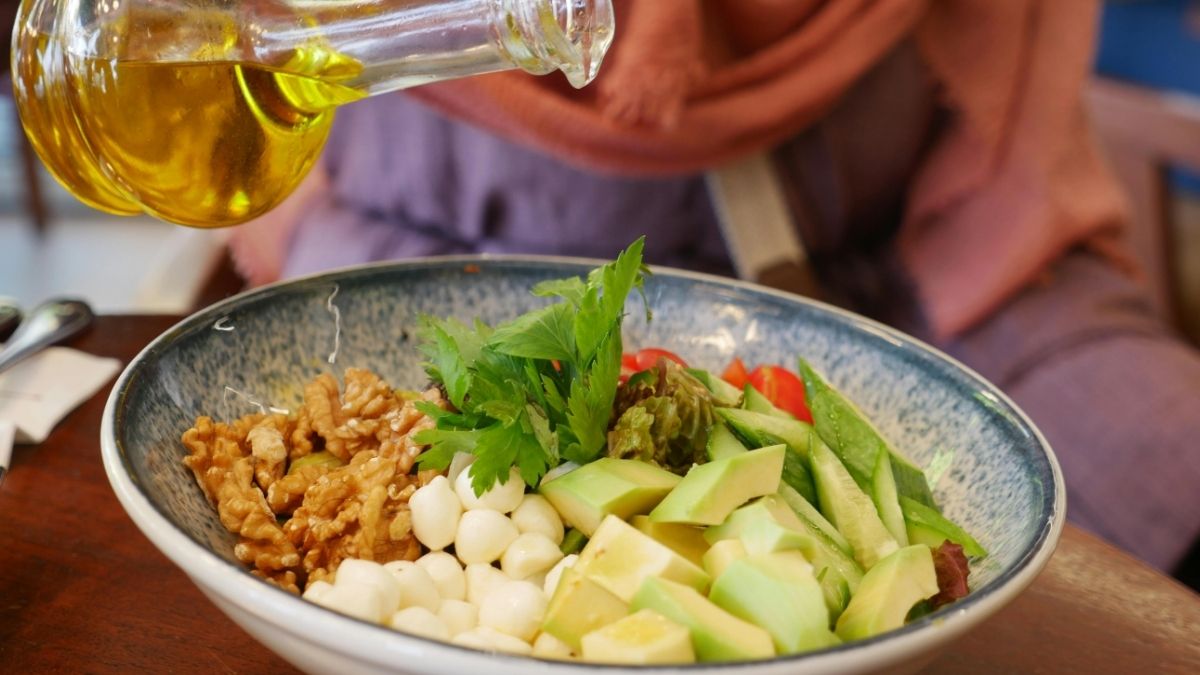

You order it at restaurants, you make it at home, and you call it a Mediterranean salad. It probably has lettuce, a thick creamy dressing, some black olives, and crumbled feta from a plastic tub. It is delicious. It is also not very Mediterranean. Here is what the real version actually looks like, and how easy it is to get there.
The Lettuce Problem
This is the big one. Traditional Greek salad contains no lettuce at all. None. What most people picture as a Mediterranean salad is an American restaurant invention, built around iceberg and dressed with something poured from a plastic bottle. The authentic version is built entirely from chunked vegetables: ripe tomatoes, cucumber, red onion, and green pepper, served in generous pieces and left to sit so their juices pool at the bottom of the bowl.
That pool of juice, mixed with olive oil and feta, is meant to be sopped up with crusty bread at the end. The lettuce was never part of the plan.
The Dressing Is Probably Wrong Too
A proper Mediterranean dressing is not creamy, not bottled, and not complicated. It is olive oil, lemon juice or red wine vinegar, Greek oregano, salt, and pepper. That is the whole recipe. Greek oregano specifically matters here because it has a noticeably earthier, more aromatic flavor than the generic version sitting in most spice racks.
Bottled lemon juice is also a shortcut worth skipping. The fresh-squeezed version has a brightness and acidity that no bottle can replicate.
Your Olives Are Probably Not Kalamata
Genuine Kalamata olives come from the Messenia region of Greece and carry a Protected Designation of Origin status in the EU. Most jars labeled Kalamata outside of Greece are a different variety entirely. Look for the PDO seal on the label, and expect a deeper, fruitier brininess than a standard canned black olive can offer. The difference is immediately obvious once you taste it side by side.
The Cheese Situation
Real feta is made from sheep’s milk or a blend of sheep and goat milk. In the EU it is legally protected, meaning only cheese produced in specific Greek regions can be called feta. The pre-crumbled cow’s milk version sold in most Western supermarkets is milder, less tangy, and melts differently. Buying a block of authentic feta and cutting it yourself changes the texture and flavour of the entire bowl.
How to Fix It This Week
Skip the lettuce. Use chunked tomatoes, sliced cucumber, red onion, and whatever pepper you have. Add Kalamata olives if you can find them. Cut a block of real feta and lay it on top rather than crumbling it through. Squeeze half a lemon over everything, add a generous pour of extra virgin olive oil, and finish with a pinch of dried Greek oregano, salt, and pepper.
The whole thing takes ten minutes and tastes more like the Mediterranean than anything that has ever come out of a bottle.
RELATED ARTICLE: 5 Mediterranean Diet Staples That Nutritionists Swear By
