

Traveling to South Korea? Street Foods You Can’t Miss

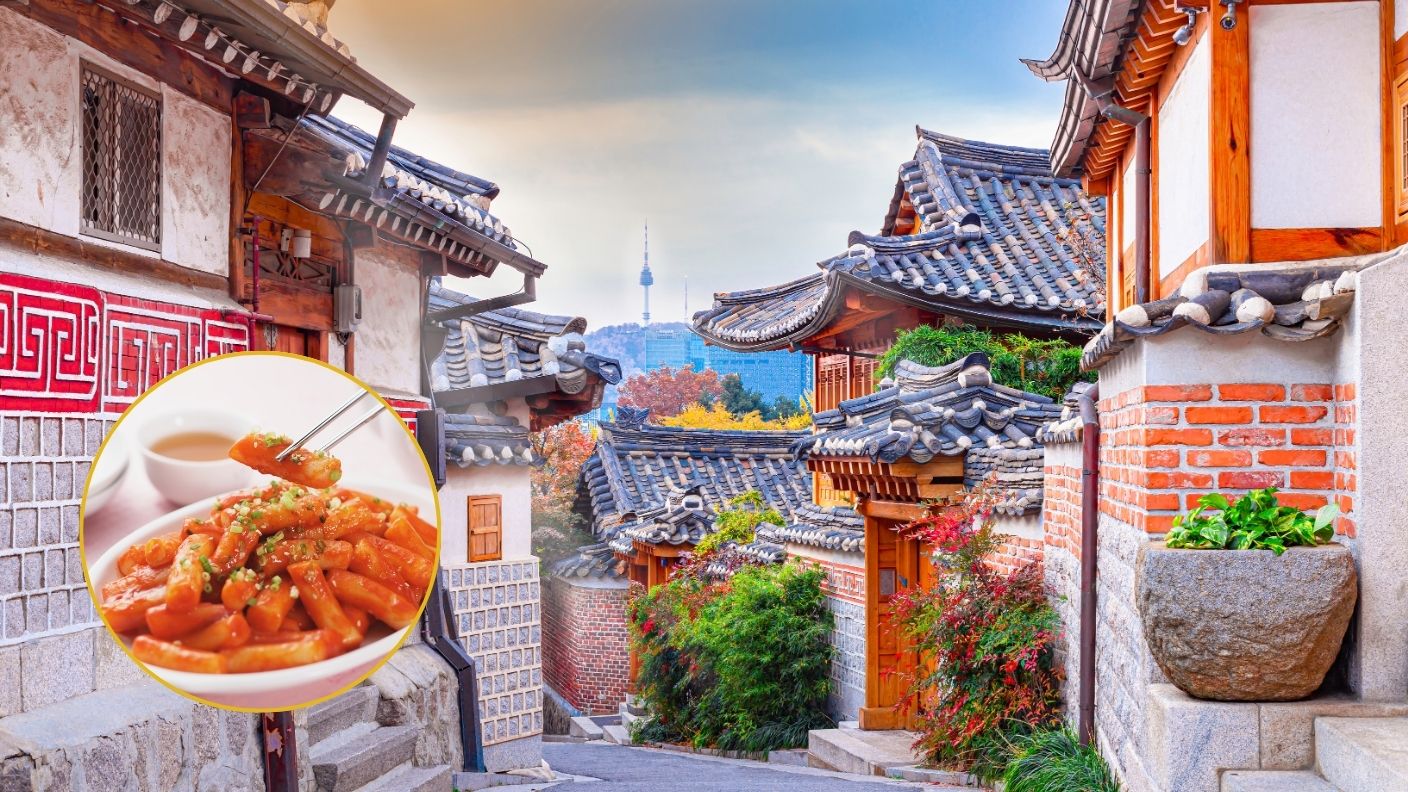

South Korea does street food differently from anywhere else on the planet. It is loud, it is steaming, it smells incredible from half a block away, and most of it costs less than two dollars.
The best spots are traditional markets like Gwangjang, the neon-lit alleys of Myeongdong, and the university energy of Hongdae, where vendors have been perfecting the same recipes for decades.
Bring cash, wear dark colors because the sauces are merciless, and eat everything you can.
Tteokbokki
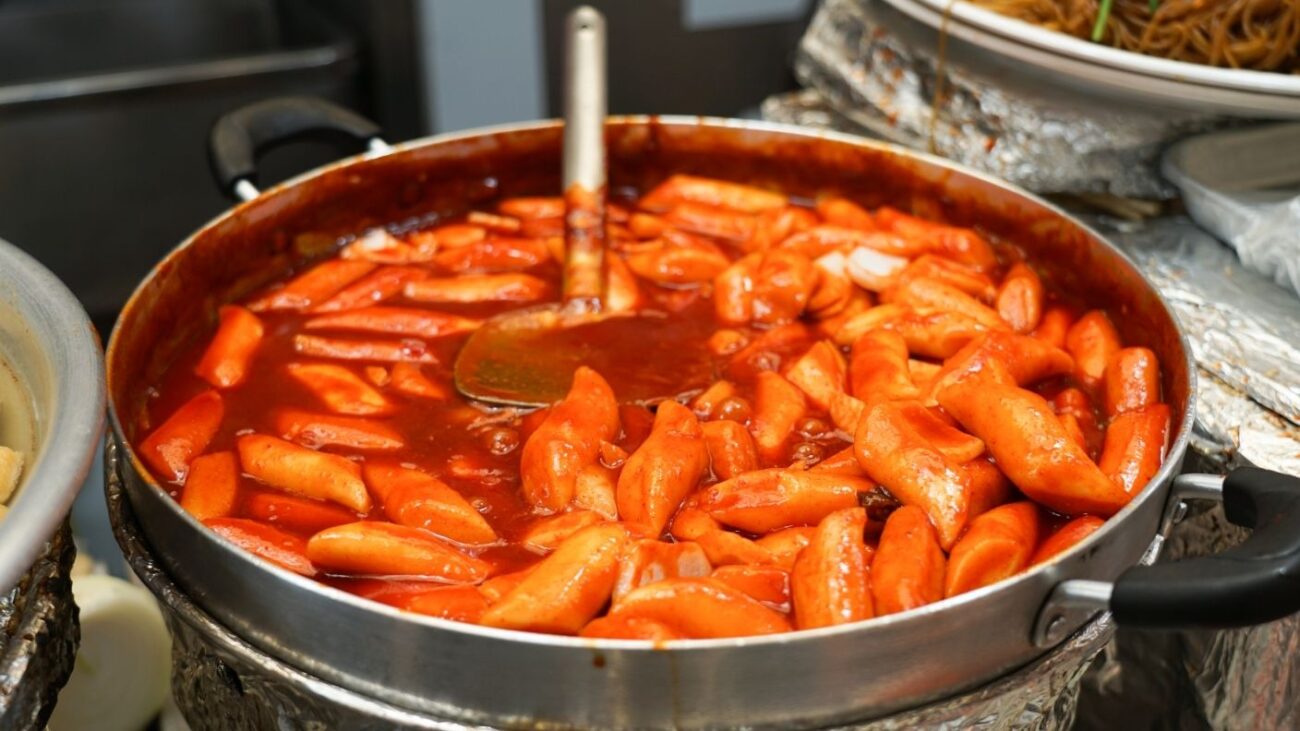
This is the one. Chewy cylindrical rice cakes submerged in a thick, fiery, sweet-spicy sauce made from gochujang, dried anchovies, sugar, and garlic, usually loaded up with sliced fish cake and sometimes a boiled egg or a tangle of ramen noodles on top.
The texture of the rice cakes is genuinely unlike anything you have eaten before, springy and dense in a way that is completely addictive. Every vendor has their own sauce formula, which means every bowl tastes slightly different.
Gwangjang Market is the classic destination, with vendors who have been making it the same way for generations.
Myeongdong’s pedestrian street has about eighty stalls, and tteokbokki anchors almost every one. The heat level varies, so ask before you commit, and always accept the free cup of anchovy broth that comes alongside it.
Eomuk
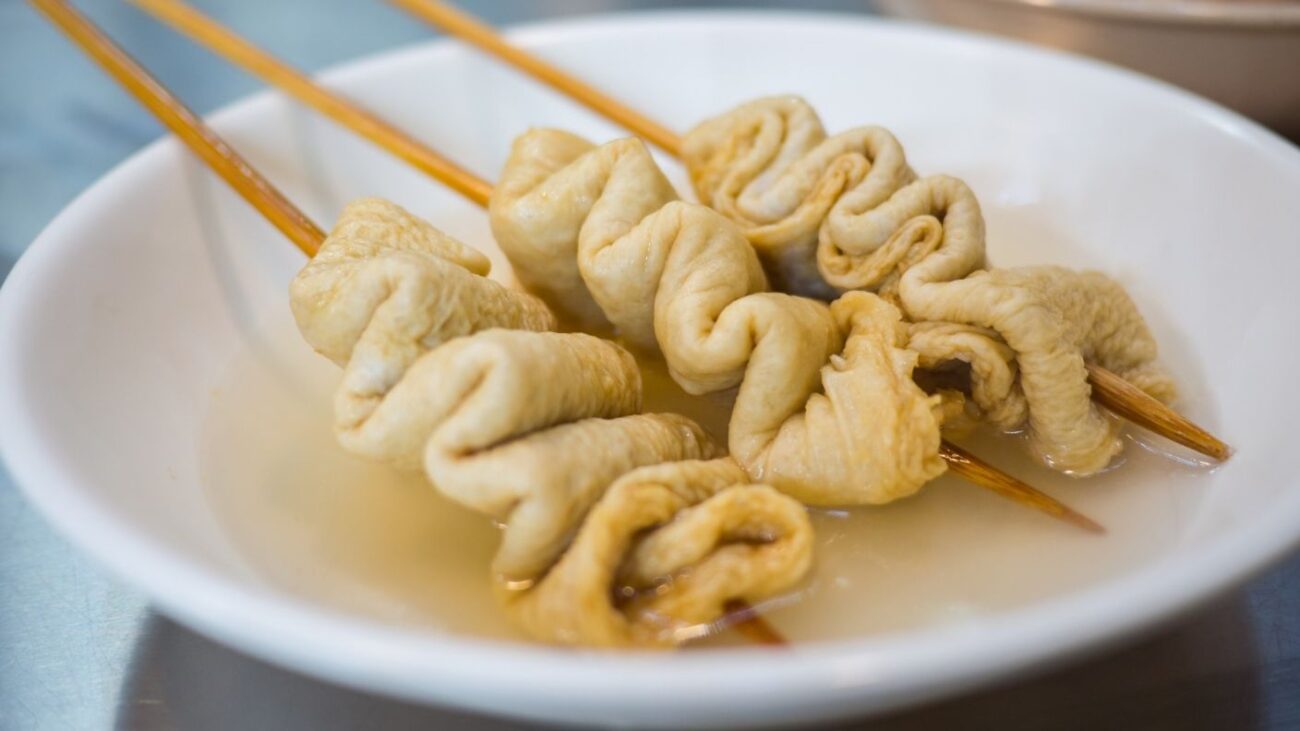
Eomuk is the quieter companion to tteokbokki and just as essential. Ground white fish mixed with starch and vegetables is pressed into sheets, folded onto long metal skewers, and simmered in a clear kelp-and-radish broth that stays warm all day in a large pot at the stall.
The broth is free, always, poured into small paper cups for you to sip alongside the skewer. It is light, savory, deeply warming, and somehow exactly what you need between bites of something spicier.
At around 1,000 to 2,000 won per skewer, eomuk is among the cheapest things you will put in your mouth in Seoul.
For a particularly good version made from fresh rather than processed fish, Samjin Eomuk in Busan has been making them since 1953 and lets you watch the whole process.
Korean Corn Dog
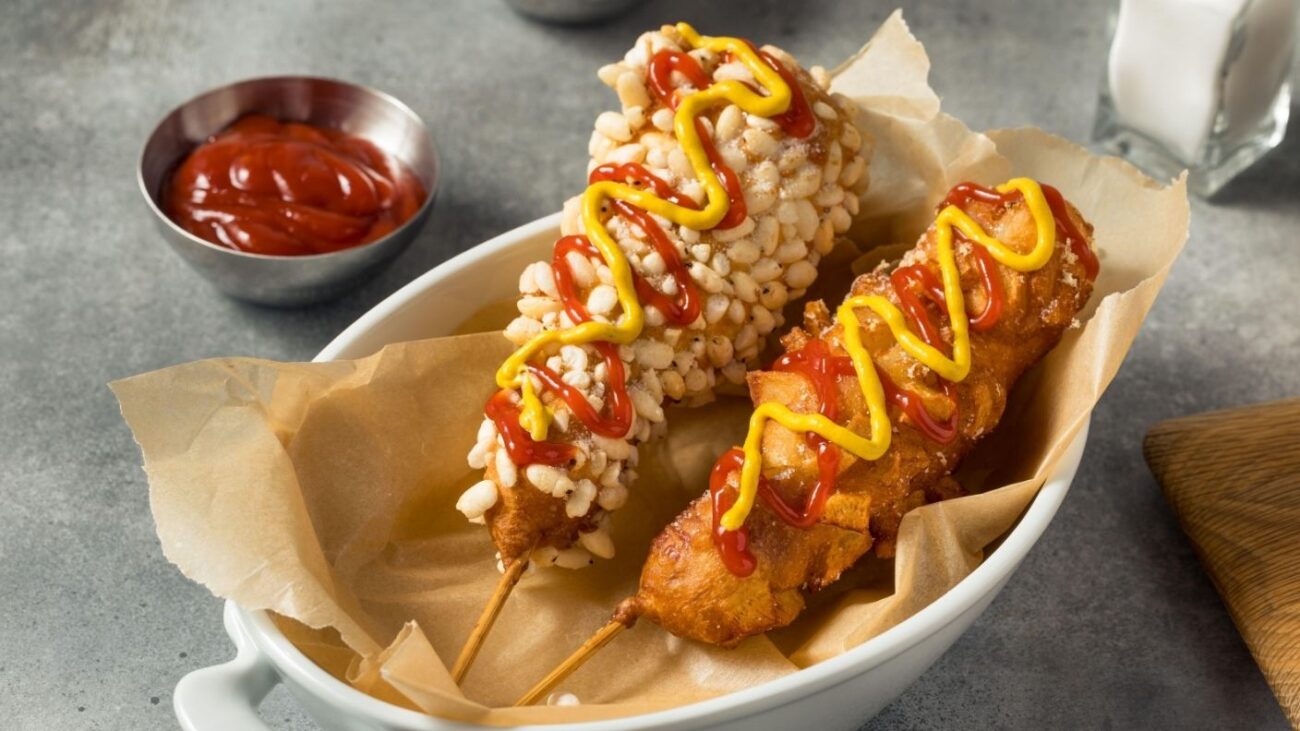
Do not let the name mislead you. This is nothing like an American corn dog, and the comparison almost undersells it. A thick, slightly sweet batter made from rice flour surrounds a sausage, a mozzarella stick, or both, and the outside gets rolled in crushed potato cubes, ramen crumbles, or panko breadcrumbs before going into the deep fryer.
After frying, the vendor dusts it in sugar and squeezes on lines of ketchup and mustard. The result is sweet, savory, crunchy, and produces a cheese pull that is genuinely cinematic.
Myungrang Hotdog is the most famous chain and has locations across Seoul. Myeongdong and Hongdae have the highest concentration of stalls. Eat it immediately, because the cheese pull peaks in the first two minutes.
Hotteok
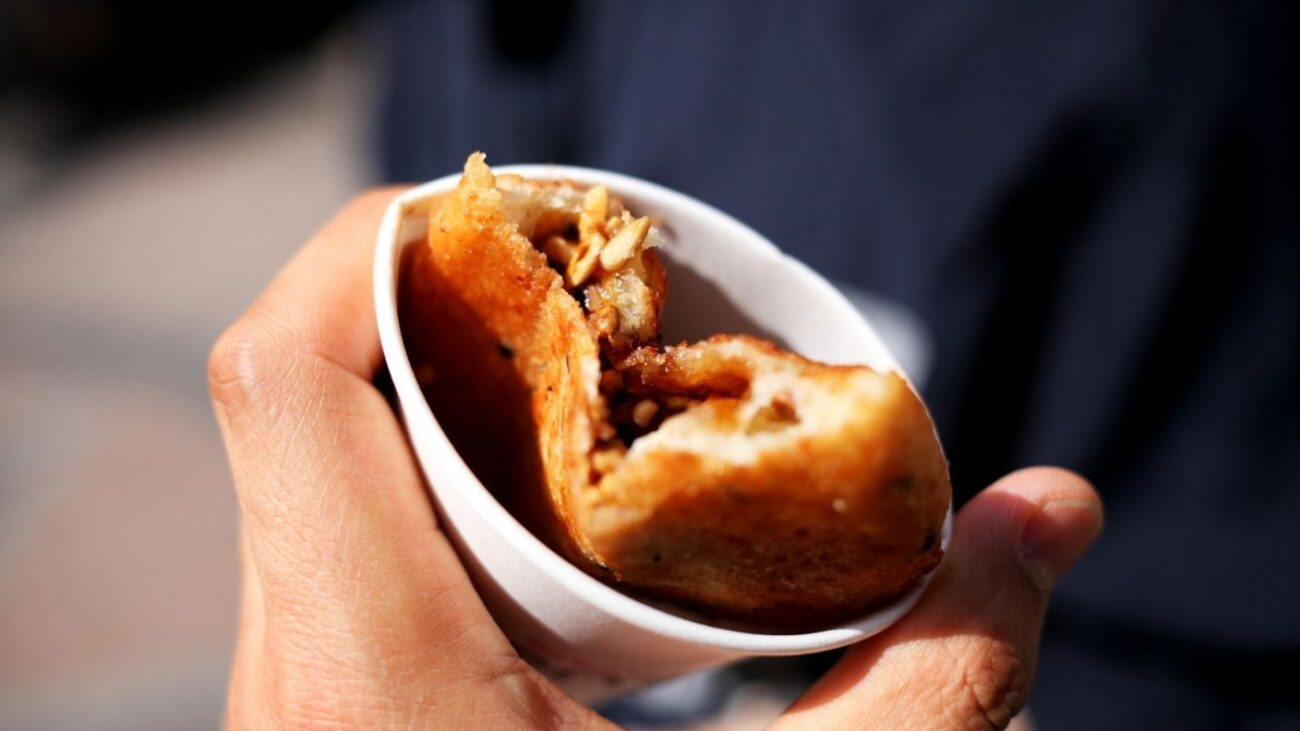
Hotteok is a thick, doughy pancake cooked on a griddle until the outside is golden and slightly crisp, hiding a molten interior of brown sugar, cinnamon, and crushed nuts that floods your mouth the moment you bite in.
The outside has a slight chew from the yeasted dough, and the contrast between the caramelized crust and the gooey sweet filling is the kind of thing people describe as almost dangerously good.
Samcheong-dong Hotteok near Bukchon Hanok Village is famous for honey and red bean fillings.
At Namdaemun Market’s Gate 2, look for the vendor near the bank selling japchae-stuffed savory versions alongside the classic sweet ones. Wait at least thirty seconds after receiving yours before biting in, because the filling stays hot long after the outside looks cool.
Gamja Hotdog (Tornado Potato)
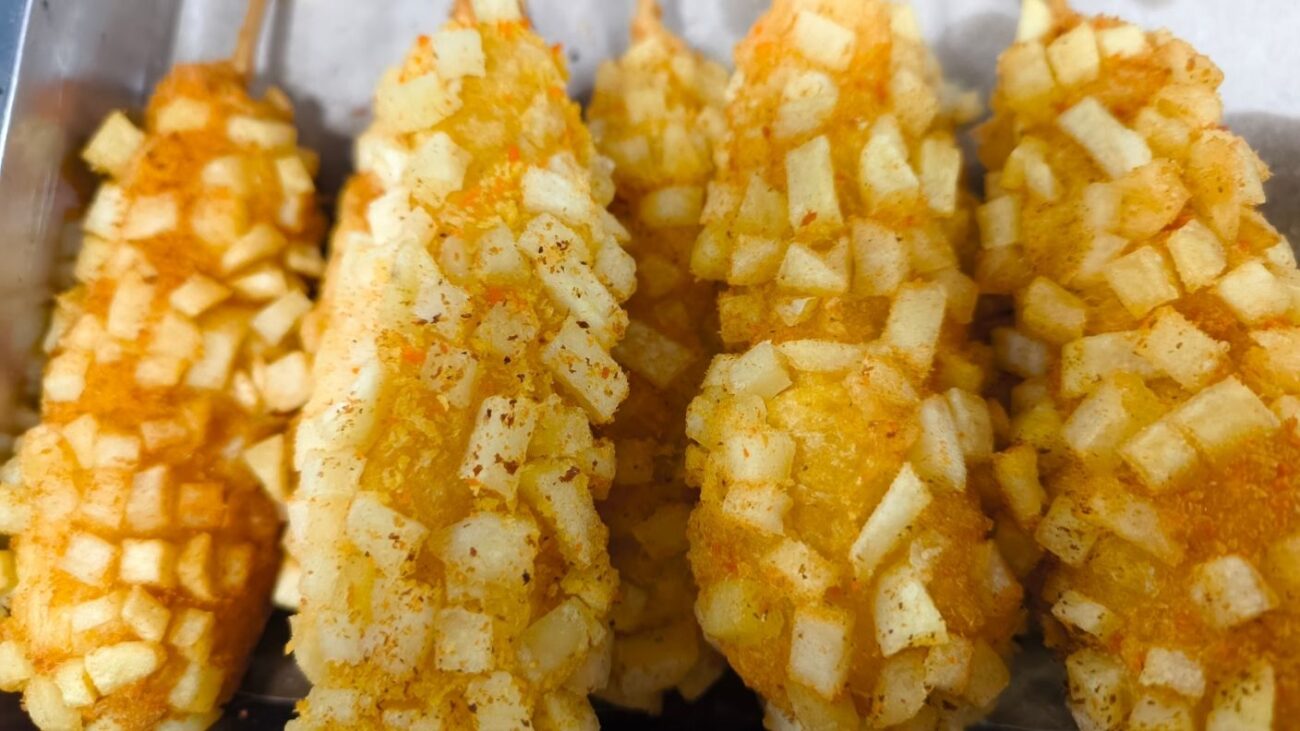
If you have scrolled through any food content from Seoul in the last few years, you have seen a tornado potato without knowing its name.
A whole potato is sliced into a spiral on a mandoline, threaded onto a skewer, and deep-fried until completely golden and crisp from tip to tip.
The result looks like a coiled spring of pure potato crunch, dusted with cheese powder, spicy pepper seasoning, or plain salt depending on your preference.
Myeongdong and Hongdae are the best places to find them, and vendors usually let you choose your seasoning. Some stalls thread a sausage through the center so you get protein and crunch on the same stick. It is extremely photogenic, very easy to eat while walking, and costs around 3,000 to 4,000 won.
Pajeon and Bindaetteok
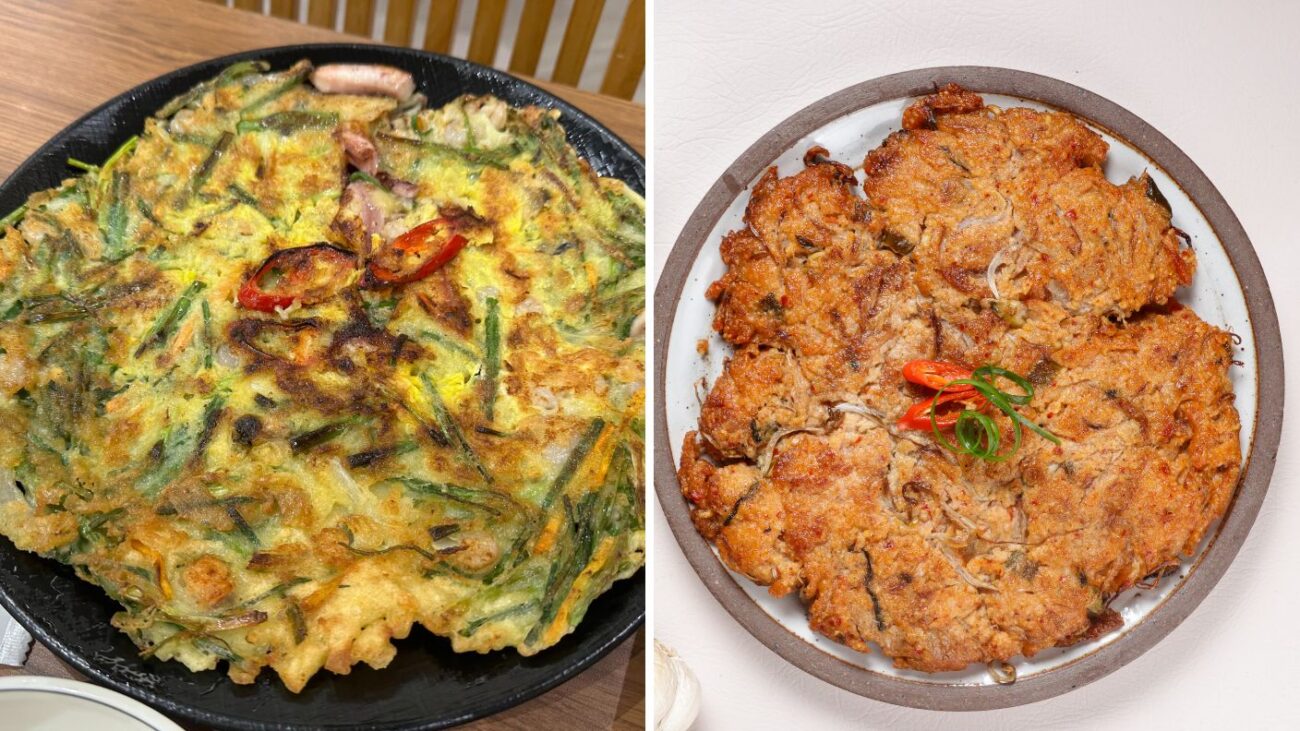
Pajeon is a savory Korean pancake made from a batter of wheat and rice flour with eggs and a heavy hand of scallions, cooked flat on a griddle and served with a soy-vinegar dipping sauce. The edges get crispy while the inside stays custardy. You can find seafood versions loaded with shrimp, squid, and clams, kimchi versions with a fermented funk, or the simple scallion original.
Bindaetteok is the mung bean version, ground mung beans mixed with kimchi and pork into a thick patty and fried until deeply golden and slightly nutty.
Gwangjang Market is the undisputed home of bindaetteok, where vendors have been making them on large flat griddles for decades and the smell draws crowds from the entrance. Order one of each and eat them side by side.
Gyeran-ppang
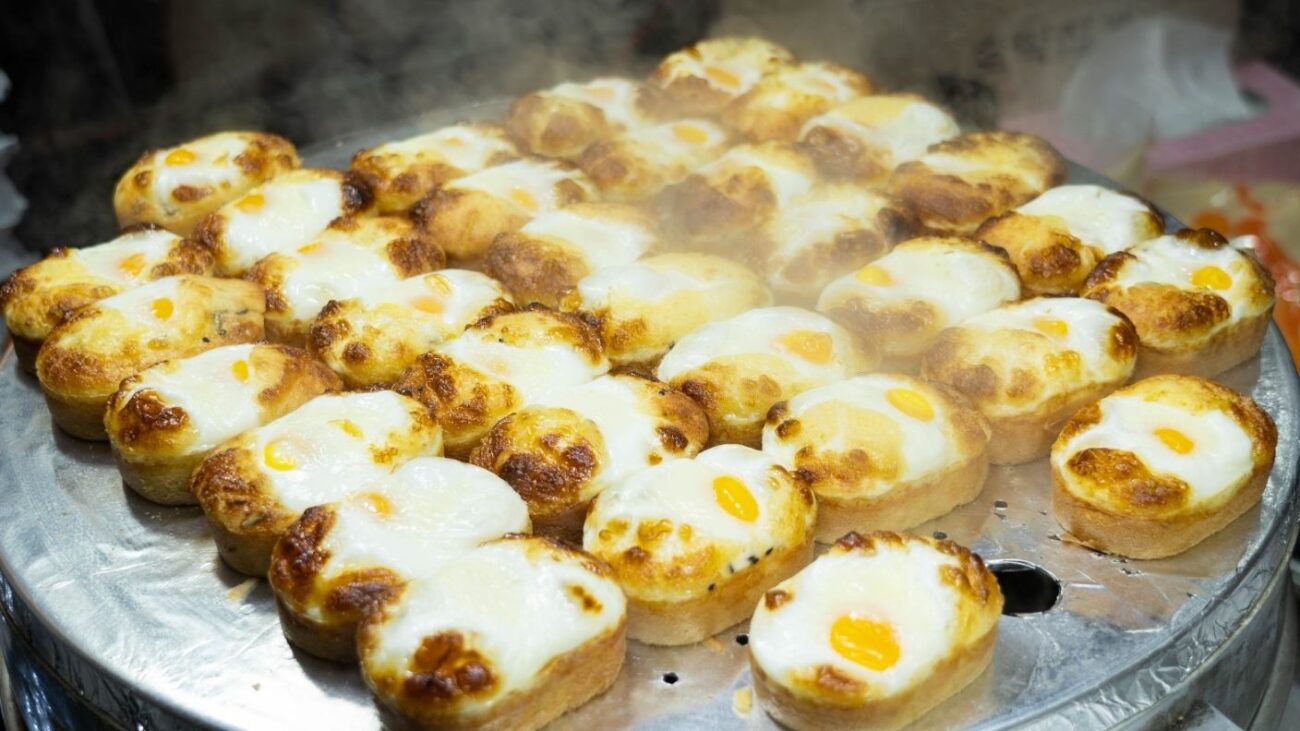
Gyeran-ppang is as simple as street food gets and somehow still completely satisfying. A small oval of slightly sweet bread batter is poured into a mold on a hot plate, a whole egg cracked directly on top, and the whole thing baked until the egg sets and the bread turns golden.
The bread is soft and lightly sweet, the egg is savory, and the combination works in a way that sounds too plain to be worth mentioning but ends up being something you want again immediately.
At 1,000 to 1,500 won per piece, it is breakfast, a snack, and a late-night decision you will not regret. Myeongdong Street Food Alley has reliable gyeran-ppang vendors throughout the day. The egg yolk is often runny, so be careful with the first bite.
Dak-kkochi
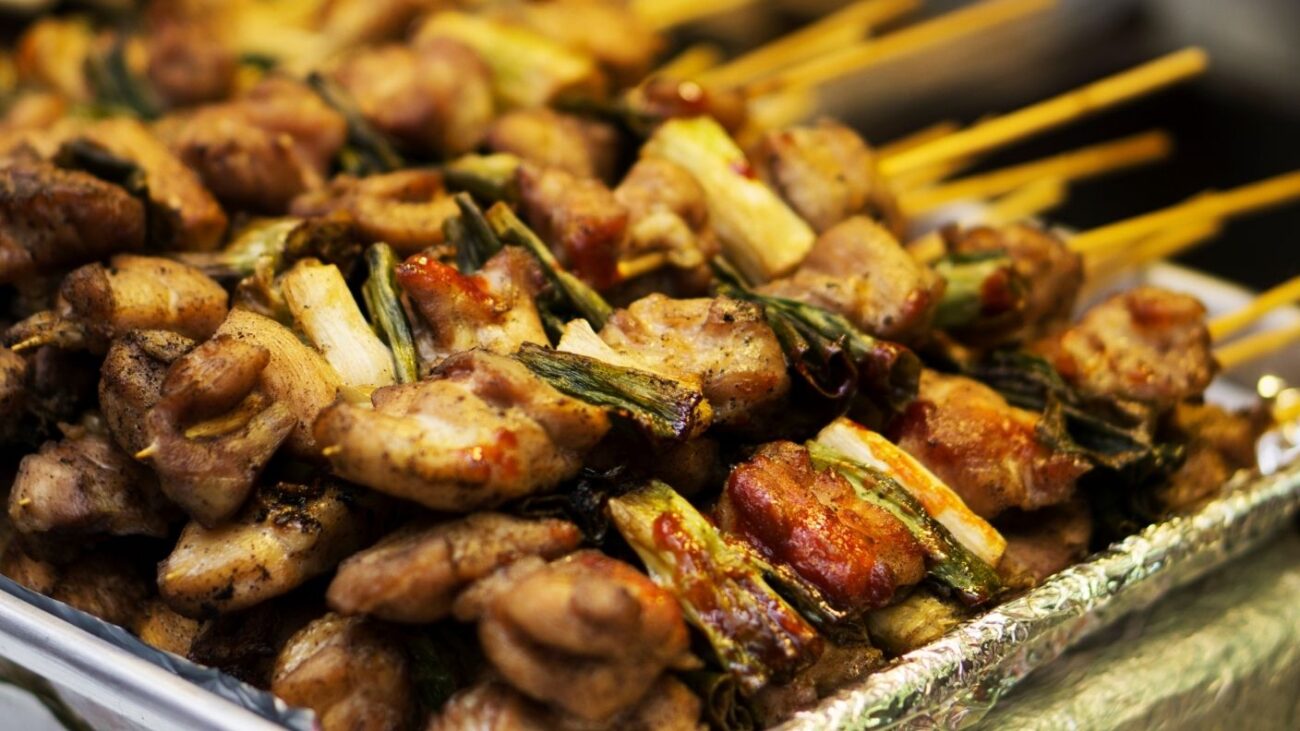
Dak-kkochi are grilled chicken skewers marinated in a sweet and spicy sauce of soy, gochujang, garlic, and sugar, then cooked over open heat with the sauce brushed on repeatedly as they char.
The outside caramelizes into something glossy and slightly sticky, the chicken stays juicy inside, and the flavor is bold enough to stand as a full snack on its own.
Some vendors grill them alongside scallions, which adds a sweet smokiness that cuts through the richness of the sauce.
Hong Cup in Hongdae is a popular spot for fried chicken in cups with honey mustard, while Myeongdong Night Market has multiple dak-kkochi vendors running all evening. They cost around 2,000 to 3,000 won per skewer and disappear fast.
South Korea’s street food is not a tourist attraction layered on top of the real city. It is the real city, the thing people eat on their way home from work, the thing students share after class, the thing that has been on every corner for longer than anyone can remember. Go hungry, go often, and tip your chin down when you bite into the hotteok.
