


Supplements vs Real Food for Longevity—What More Experts Are Saying

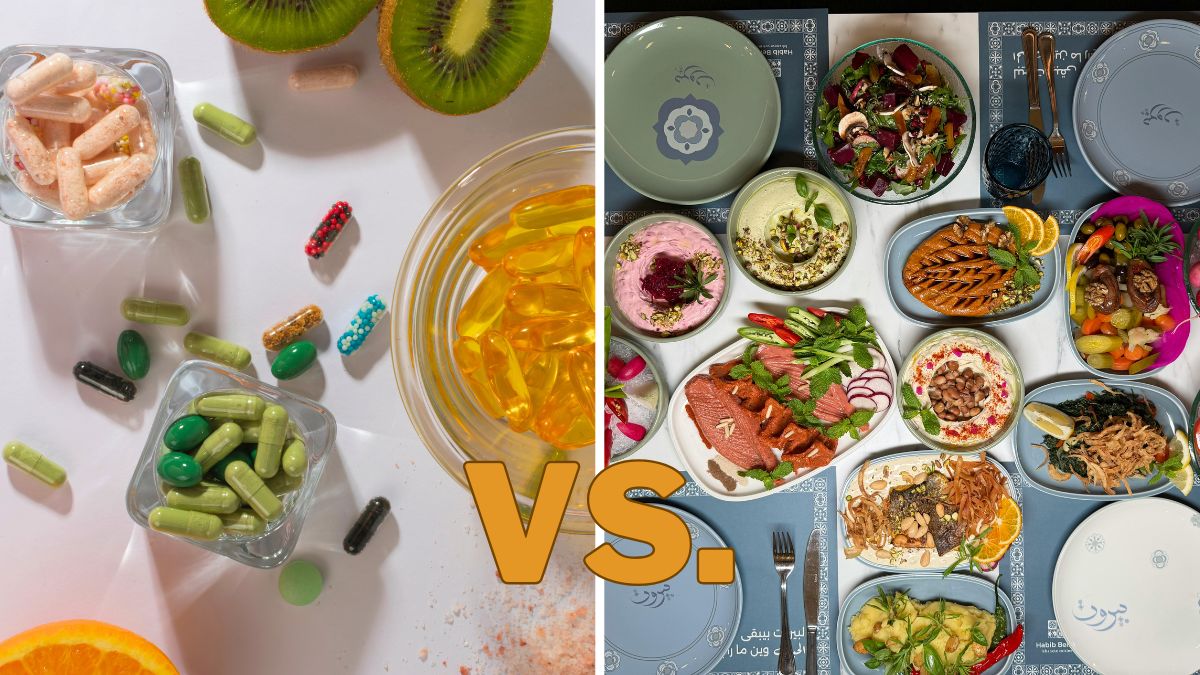

The longevity supplement industry has never been louder. Podcasts are packed with stacks, capsules, and powders promising to reverse biological aging, and the products selling them are doing extraordinarily well.
But a quieter, more grounded conversation has been building in parallel, one happening between actual researchers and clinicians who keep arriving at the same uncomfortable conclusion: for most people, the evidence for whole food still outpaces almost anything in a bottle.
What a Major 2025 Study Actually Found
The research case for food over supplements received a significant boost from a study published in Nature Medicine that analyzed more than 100,000 adults and found that adhering to a plant-forward diet, specifically one rich in whole grains, fruits, vegetables, and nuts, was associated with significantly better aging outcomes.
The researchers found not one perfect diet, but several patterns that all shared the same foundation: minimally processed plants and healthy fats.
What they did not find was a supplement stack that replicated those results. According to Dr. Matt Kaeberlein, a biologist focused on health span extension, the idea of “superfoods” is largely a misconception used for marketing purposes, and there is no single food, let alone supplement, with magical properties.
Why Food Does Something Supplements Cannot
The core argument from nutrition scientists keeps coming back to the same concept: food synergy. Whole foods provide a synergistic blend of vitamins, minerals, fiber, and phytochemicals that work together for optimal absorption and health benefits, a combination that isolated supplements simply cannot replicate.
Harvard medical experts note that nutrients are most potent when obtained from food, where they appear alongside hundreds of carotenoids, flavonoids, minerals, and antioxidants absent from most supplements.
A study finding that nutrients from food reduced heart disease deaths, while the same nutrients taken as supplements showed no similar benefit, captures the distinction clearly.
The Overhyped Supplement Problem
The longevity supplement space has a credibility issue that experts are increasingly willing to name directly.
Studies on longevity supplements done in animals show promising results, but there is limited evidence on their safety and effectiveness in humans, and the way these findings get interpreted in marketing often differs significantly from what scientists actually reported.
The most overhyped category right now includes NMN and NAD+ boosters, resveratrol, broad antioxidant stacks, and longevity blends that combine trendy ingredients into premium bottles.
The National Institute on Aging notes that dietary supplements do not require FDA approval for safety or effectiveness before being sold, meaning flashy claims routinely reach consumers long before the science is anywhere close to settled.
Where Supplements Do Make Sense
To be clear, experts are not dismissing supplements entirely. The distinction they keep drawing is between targeted supplementation for verified deficiencies versus buying longevity promises in a bottle.
About 40% of Americans are deficient in vitamin D, and deficiency has been linked to an increased risk of Alzheimer’s, cognitive impairment, and cancer. That is a meaningful gap worth closing.
Magnesium is consistently deficient in older adults, omega-3s are genuinely hard to get without eating fatty fish regularly, and vitamin B12 absorption declines with age in ways that food alone cannot always fix. These are the kinds of targeted gaps that supplementation addresses well and that experts actually recommend.
What the Clearest Longevity Signal Looks Like
After all the noise around capsules and protocols, the signal from the research keeps simplifying.
The Dietary Guidelines for Americans emphasizes meeting nutritional needs primarily through food rather than supplements, a position reinforced by decades of evidence showing that dietary patterns, not supplement use, drive the outcomes seen in long-lived populations.
A useful framing from one expert is simple and hard to argue with: look at how much of someone’s diet is minimally processed plant food versus ultra-processed calories, and you already know most of what you need to know about their aging trajectory.
The honest version of the longevity conversation is not particularly glamorous. It does not require a supplement budget or a biohacking protocol.
It requires a produce aisle, a consistent eating pattern, and the kind of targeted supplementation a doctor recommends based on actual blood work.
That gap between what the research says and what the industry sells has never been wider, and more experts are finally saying so out loud.
