


Do Women Really Gain Weight More Easily Than Men?

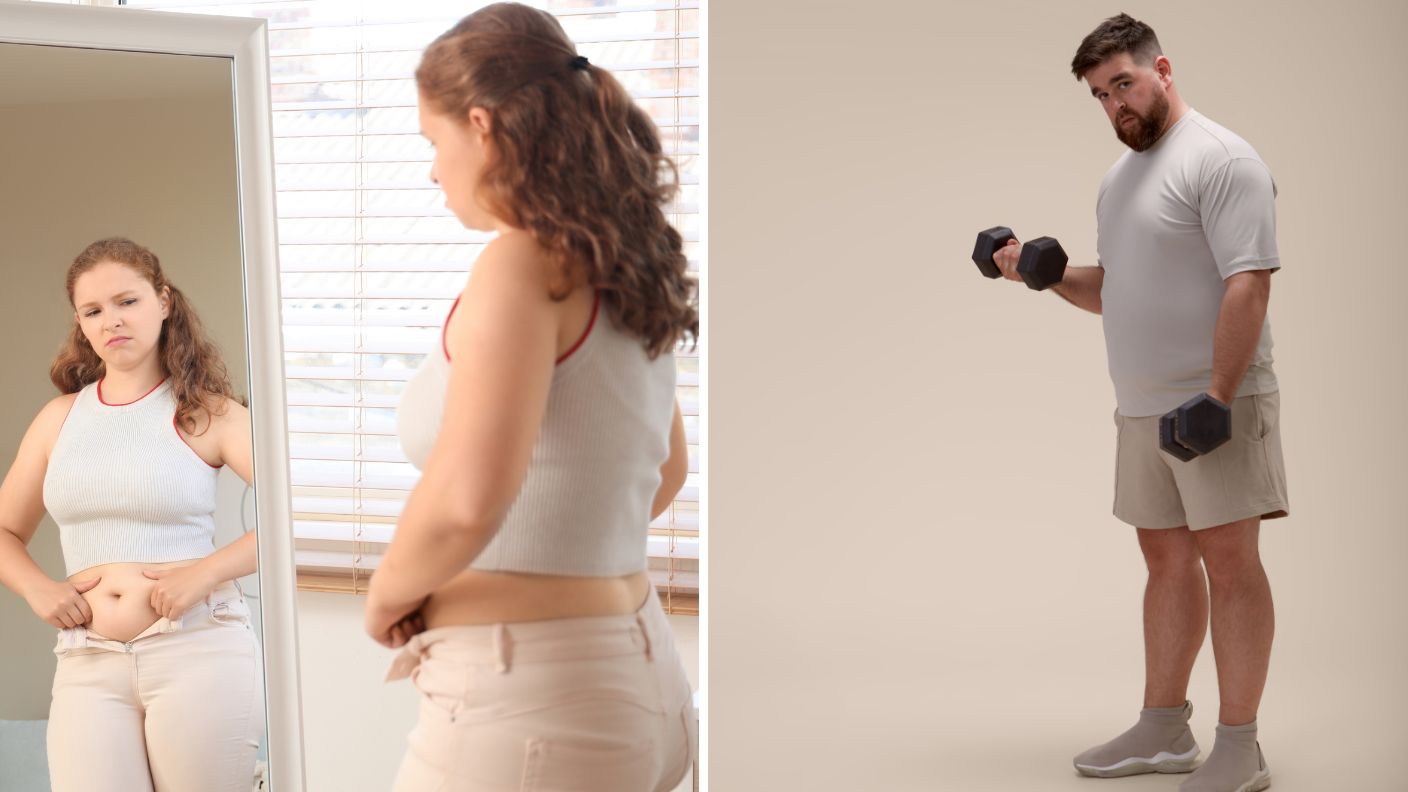

Scroll through enough comment sections about diet and weight, and someone will eventually say it: women just gain weight easier than men, full stop. It gets repeated so often that it barely registers as a claim needing evidence anymore, more like something everyone already agrees on.
The actual research paints a messier, more interesting picture than that one-line explanation suggests.
Why Estrogen Makes Fat Easier to Store
A big part of the explanation traces back to hormones, specifically the different levels of estrogen and testosterone circulating in male and female bodies.
Estrogen tends to encourage the body to hold onto fat, particularly around the hips and thighs, while testosterone pushes the body toward building muscle instead, a pattern summarized in a review of sex differences in obesity research.
That hormonal split isn’t something either sex can simply override through willpower. It’s built into how each body responds to the same meal, the same workout, or the same calorie surplus, long before any conscious choice comes into play.
Muscle Mass and Resting Metabolism
Because testosterone builds more muscle mass on average, men’s bodies tend to burn more calories even at rest. Muscle tissue is more metabolically active than fat tissue, so a higher muscle-to-fat ratio translates into a higher resting metabolic rate day after day.
Some research on fat storage points out that this alone lets men generally eat more calories without gaining weight compared to a woman of similar size.
Women aren’t burning fewer calories because of some flaw in how their bodies work. It’s simply a byproduct of body composition, and it means the same slice of cake affects two otherwise similar bodies differently.
How Body Fat Is Distributed Differently
Even at a healthy weight, men and women tend to carry fat in different places. Men typically store more fat around the abdomen, while women store more around the hips and thighs, a pattern tied to how easily each type of fat releases and burns for energy.
Belly fat tends to mobilize more readily than fat stored in the hips and thighs, which may partly explain why weight seems to come off certain areas faster for men. For the same reason, some regions of fat on a woman’s body can feel stubborn no matter how consistent her routine is.
What the Research on Obesity Trends Actually Shows
Sex differences in weight gain aren’t just theoretical talk. A study out of the University of Aberdeen found that the region of the brain responsible for regulating appetite and energy expenditure is wired differently in male and female mice, which changed how each sex responded to the same obesity treatment.
That same research pointed to global data showing higher rates of obesity in women across many parts of the world. It doesn’t mean every woman gains weight more easily than every man, but it does suggest the biological deck is stacked somewhat differently by sex.
How Men’s and Women’s Diets Actually Compare
Some of the gap also comes down to what men and women eat on an average day. National data compiled by the CDC shows adult men consuming roughly 2,500 calories daily, compared to about 1,770 for women, a gap that holds across every age group surveyed.
The types of food differ too. Research on protein sources has found that men consistently eat more meat and processed meat, while women lean more toward soy and other plant-based proteins, a pattern documented in a recent study comparing dietary habits by sex.
Alcohol adds another layer to that gap, since men also tend to get a larger share of their daily calories from beer, wine, or liquor than women do on average.
Why the Answer Isn’t a Simple Yes or No
All of this adds up to a real, measurable tendency, but it isn’t destiny. Age, activity level, genetics, sleep, and stress all shape how easily any individual body stores or loses fat, regardless of sex.
Framing weight gain as something women are simply worse at fighting than men overlooks how much biology is working in the background either way. The more accurate takeaway is that women’s bodies are operating under a different set of hormonal and metabolic rules, not a weaker version of the same one.
RELATED ARTICLE: Over 40 and Finding Weight Loss Harder? This Breakfast Upgrade May Be the Answer
