


Can You Pour Pasta Water Down the Sink? What Starch Really Does to Your Pipes

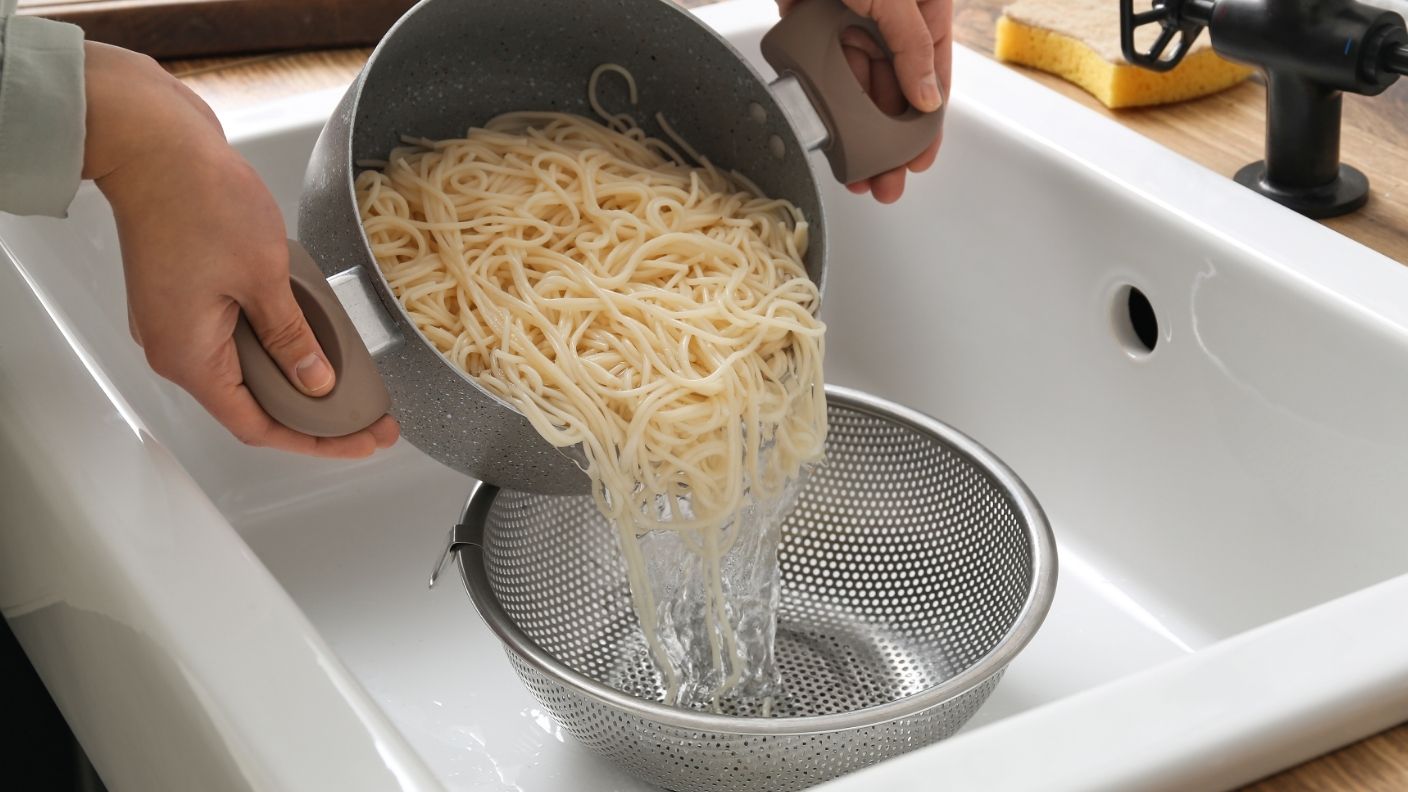

Every kitchen has the same small scene. Pot of pasta, steam in your face, colander balanced in the sink, and that half-second where you wonder if you’re about to wreck something. Somebody told you once that starchy water clogs drains. Somebody else called that nonsense. Both said it with total confidence.
We all can agree on the fact that pouring pasta water down the sink is usually fine. Usually. That word carries a lot of weight, and the rest of this piece is about what hides inside it.
What’s actually in the pot
Pasta water is mostly water. The salt you add remains in the pasta water. The noodles are cooking and a cloud of starch is escaping. The story is that murky. Dried pasta is made from Durum wheat semolina. That Durum wheat semolina is starchy.
As you drop the dried pasta into boiling water the starch granules start to swell. Out of that starch we get a little in the pot. Most recipes call for four to six quarts of water per pound of pasta. So thin is the spread of the starch that leaks out.
It creates a haze, not a paste. Cooks value that haze because it helps sauce cling to the noodles. Plumbers hear about that haze for a reason. The gap between those two reactions comes down, to temperature.
Why starch has a reputation
The behavior of starch varies with temperature. Heating starch in water causes the starch granules to absorb water and swell up. The mixture thickens as the swelling. This thickening is called gelatinization. With wheat starch, gelatinization begins at a temperature of between 140 and 160 degrees Fahrenheit.
Such temperatures are far below the boiling point of water. As the liquid cools, the starch molecules link up. Create a network. That network is the reason for the skin on leftover gravy, and the hardened, putty-like texture of cold porridge.
Now a drain line is not a pot. Water that flows down your sink cools fast as it moves through the pipes. That water also carries any residue that sticks to the inside of the pipe. When the pipe is clean and smooth the flow is strong. In that case diluted starch passes through the pipe without sticking.
If the pipe is rough slightly, off-kilter or already coated with residue the starch finds a place to cling. That’s the mechanism; not the starch alone but the starch plus a surface to land on.
The bakery lesson
Anyone who has worked a bakery bench knows this without being told. Flour and water make glue. Let a bowl of it dry overnight and you’ll need a scraper and some colorful language to get it off. Pasta comes from the same family of material, and the thin film pasta water can leave on a pipe wall is a cousin of that dried bowl.
A film on its own isn’t heavy. It’s sticky, though, and sticky is how a pipe starts collecting things. A strand of hair here, a smear of oil there, a shred of food that got past the strainer. The starch is the tape. Everything else is what gets taped.
People tend to blame the last thing that went down the drain, when the real buildup took months. The pasta water just happened to be the final straw.
Where it actually goes wrong
This pattern keeps showing up. Nobody blocks a drain with pasta water by itself. The blockage comes from pasta water with everything else that ran through the sink that week. The pot that held the bolognese. The pan with the bacon grease. A splash of oil in the boil because someone said it keeps noodles from sticking (it helps, actually) Oils.
Solidify inside pipes and utilities and plumbers have warned about fats, oils and grease for years. Starch on a wall behaves differently from starch on a pipe. If your kitchen sink already drains slowly, makes a gurgling sound or smells a little off after cooking nights then pasta water is not the cause. The real culprit is the messenger.
An experienced local plumber already use can simply step in at this point and put a camera down the line before the slow drain turns into a standing-water Sunday.
Then there’s the other half of the problem: the pasta itself. Small shapes like orzo and ditalini slip through colander holes and settle in the trap, where they keep absorbing water and swelling. Cooked pasta can roughly double in weight as it soaks up water, and a damp little plug in a P-trap does nothing good for flow.
A garbage disposal doesn’t rescue you either. People assume it grinds noodles into harmless confetti. What it often makes is a paste, and paste is exactly what we’ve been talking about. Disposal manufacturers and plumbers alike tend to advise keeping pasta, rice, and other starchy leftovers out of the unit.
When a Slow Drain Needs More Than Hot Water
Hot water can help keep starch moving, but it won’t do much for a drain that’s already starting to clog. If the sink keeps draining slowly or starts gurgling after you’ve cleaned the trap, there’s probably more going on inside the line.
That’s when a plumber Richardson TX can take a closer look and figure out where the buildup is coming from. A camera inspection can show whether it’s just residue near the sink or a bigger problem farther down the pipe.
Older houses, older pipes
Location matters more than people admit. Much of Richardson was built out in the decades after World War II and homes from that era were commonly plumbed with cast iron drain lines.
Cast iron holds up for a time but cast iron corrodes from the inside and the interior wall of a cast iron line turns rough and scaly. Rough walls catch debris the way a cheese grater catches cheddar. Newer PVC lines have a smoother interior, which is part of why PVC lines shed buildup more easily.
So the same pot of pasta water can be harmless in one house and a slow‑motion problem in the one down the street. The age and condition of a pipe matter than the starch does.
Homes on a septic system have their own wrinkle. A working septic tank can handle kitchen wastewater but fats and food solids are what stress the septic system. Same advice, room, for error.
What buildup looks like
It rarely announces itself. A sink that clears after a plunge and then slows down again two weeks later. A gurgle from the drain a few seconds after the water leaves. A faint sour smell that bleach doesn’t fix. In a double-basin sink, water rising in the second side when you drain the first.
Every one of those says the pipe is narrowing somewhere. Pouring more drain cleaner at it is the usual first move, and it’s the one I’d question. Harsh chemicals tend to punch a hole through the clog and leave the lining of it behind, which means it comes back.
The thing most people overlook
It’s what happens after the pour. Water goes down, the cook walks away, and the starchy residue sits in the trap and the first stretch of pipe, cooling off. Nobody follows it with anything.
Hot water helps. Run the hot tap for a good half minute after you drain the pot, and the warm flow keeps the starch moving instead of letting it set up on the walls. It costs nothing and takes less time than finding the dish soap.
What to do instead
Yet don’t pour it all out. Take a cup before you drain. Chefs look at that starchy liquid as an ingredient because a splash of it makes a sauce thicker and helps oil and water mix into something. If you are adding sauce to the pasta anyway you are throwing away the part.
Whatever is left can have another use in the garden with one rule: it has to be unsalted and cooled. Salt is not good for plants so if you added salt to the pot the sink is the right place to pour it after all. A small amount of water going down the drain won’t hurt anything.
The rest is a habit. Put a basket strainer in the drain. Pour it into the trash and scrape pots and pans before they touch the water. Cooking fat goes into a can, not the sink. None of it is exciting. All of it is cheaper, than a service call.
So, can you?
Yes, in most homes, most nights, with no drama. The starch isn’t the villain people make it out to be. What gets pipes in trouble is the stack of small habits around it, the grease and the scraps and the old line nobody has looked at in years.
Pipes keep score quietly. They never raise their voice until they quit. Pay attention before they do.
