


The Strangest Foods Around the World That People Actually Eat


Every country has a dish that sounds invented the first time an outsider hears about it, right up until they watch a local eat it without blinking. Some of these foods trace back to necessity, some to preservation methods that predate refrigeration, and some just to a culture deciding a particular ingredient was worth the trouble.
None of them are jokes to the people who grew up eating them.
Balut, the Fertilized Duck Egg of the Philippines
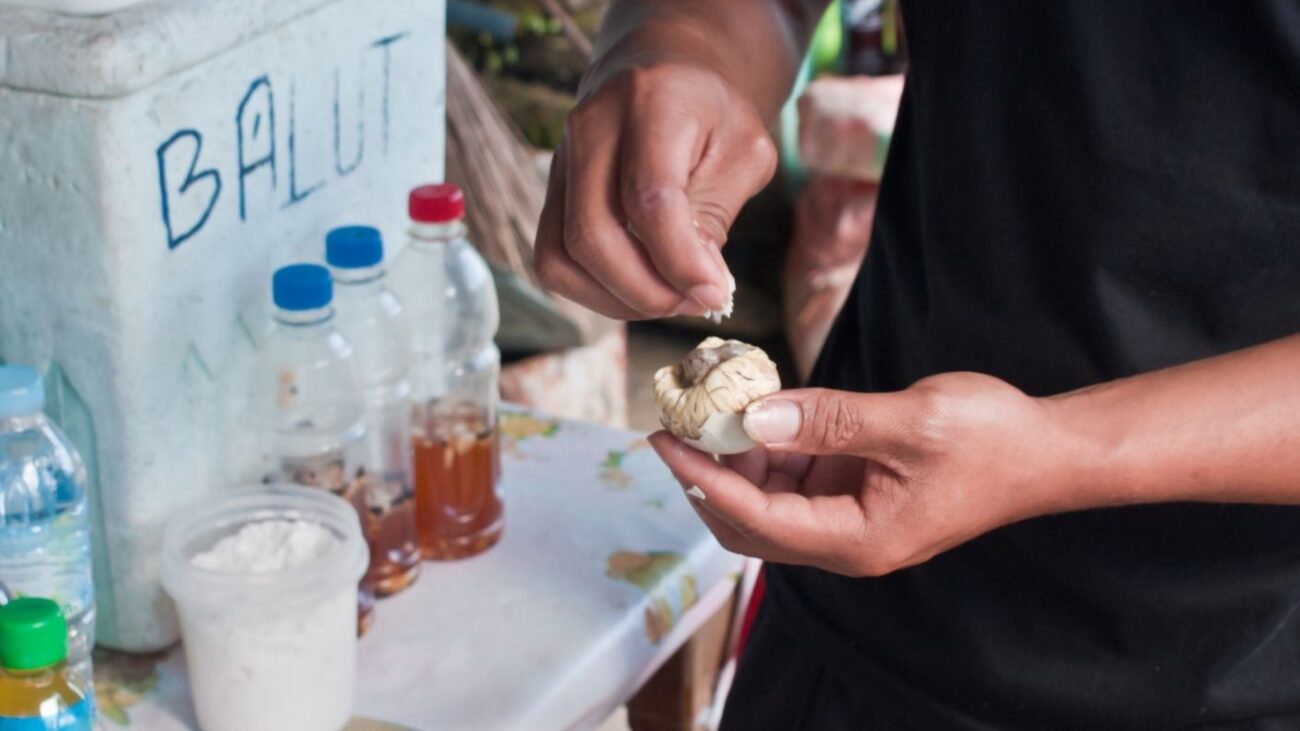
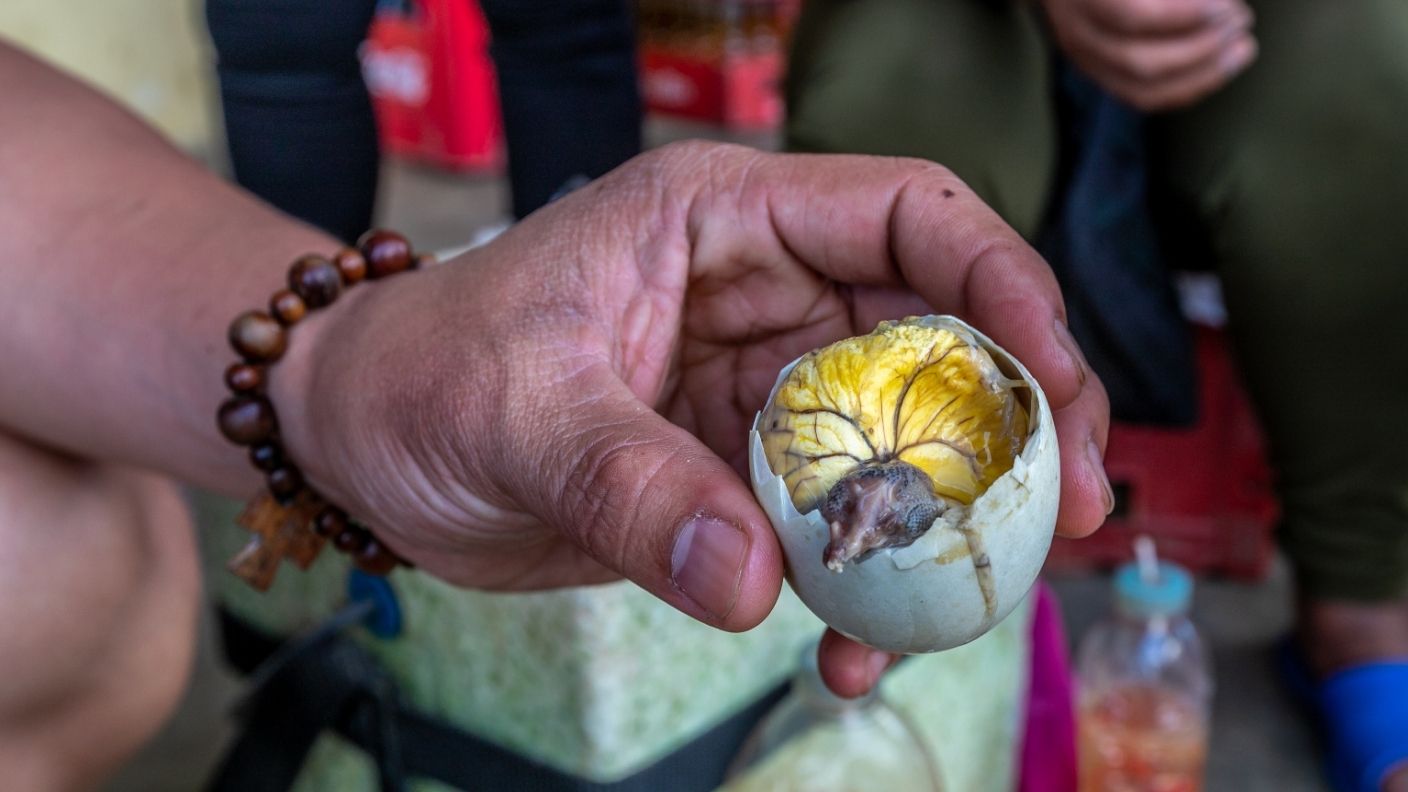
Balut is a fertilized duck egg that’s been incubated just long enough for a partially developed embryo to form inside, then boiled and eaten straight from the shell. Street vendors across the Philippines sell it warm, often late at night, cracked open at the top and eaten with a pinch of salt or a splash of vinegar.
The broth inside tastes rich and savory, closer to a concentrated egg yolk than anything unsettling, while the embryo itself has a texture that ranges from soft to slightly chewy depending on how far along it developed. First-timers are usually warned to eat it in the dark or avoid looking too closely, advice that says more about presentation than flavor.
Century Egg, China’s Preserved Delicacy
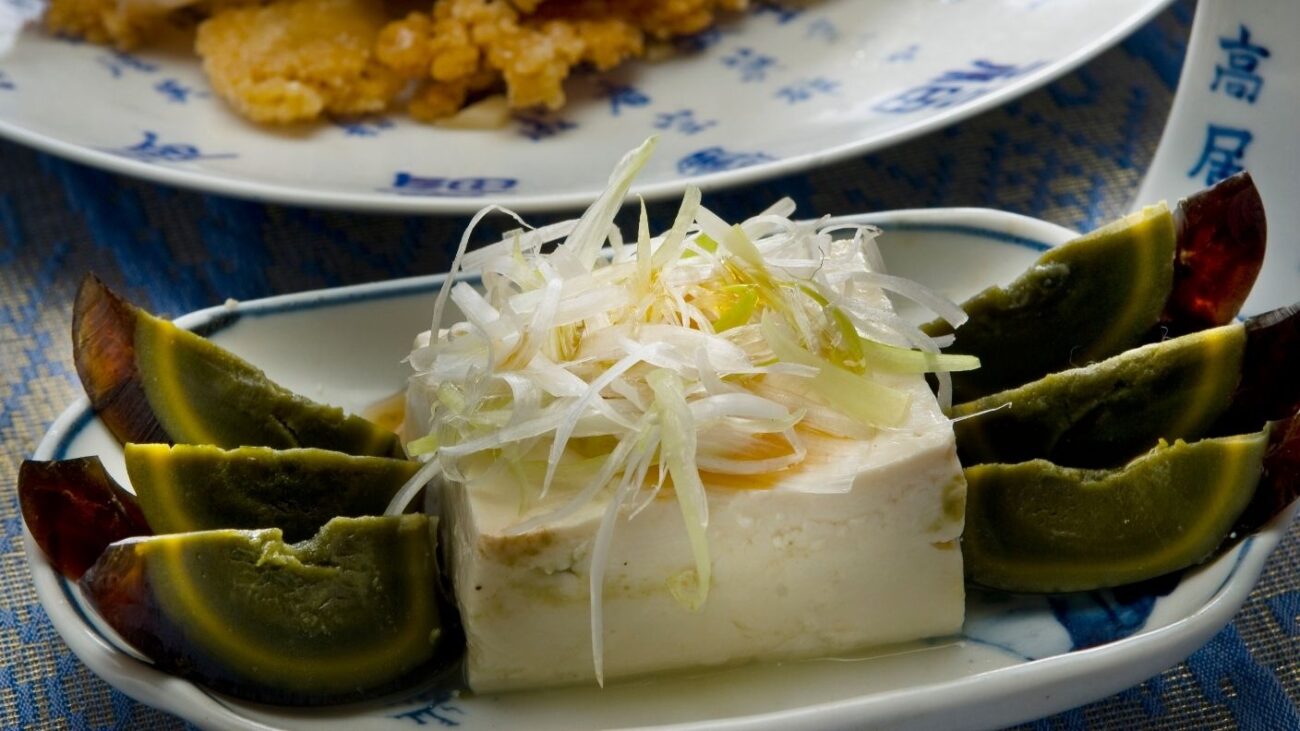
A century egg isn’t actually a hundred years old, but it can spend weeks or months packed in a mixture of clay, ash, salt, and lime before it’s ready to eat. That curing process turns the yolk a deep, creamy green and the white into a translucent, dark amber jelly.
The flavor lands somewhere between a strong blue cheese and a hard-boiled egg that’s picked up notes of ammonia and sulfur along the way. It’s most often served sliced over congee or tofu, where its intensity gets balanced out by something milder sitting right next to it.
Casu Marzu, the Cheese With Live Maggots
Casu marzu starts as an ordinary Sardinian sheep’s milk cheese, until cheese flies are deliberately allowed to lay eggs inside it. The larvae that hatch break down the fat inside the cheese, turning it into an extremely soft, almost liquid texture that regular pecorino never reaches.
The cheese is traditionally eaten with the larvae still alive and moving, spread onto bread, though some eaters prefer to let it sit until the maggots have died off first. Its taste is famously sharp and peppery, intense enough that it’s technically been restricted for sale in parts of the European Union over food safety concerns.
Hákarl, Iceland’s Fermented Shark
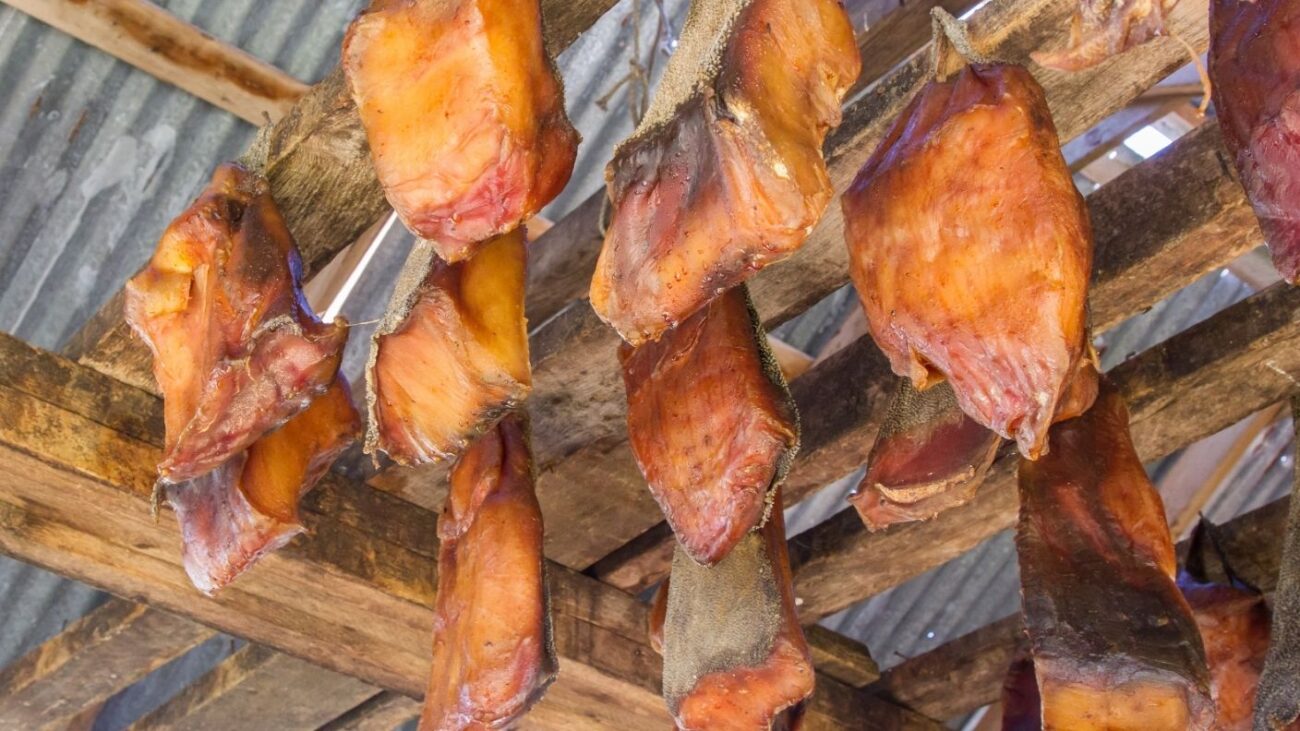
Hákarl is made from Greenland shark, a species whose flesh is toxic when fresh because of high concentrations of uric acid and trimethylamine oxide. Icelanders solved that problem centuries ago by fermenting the meat for months, then hanging it to dry for several more.
The result smells strongly of ammonia, similar to a public restroom, which tends to reach a taster’s nose well before the fish reaches their mouth. The flavor is milder than the smell suggests, chewy and fishy, and it’s traditionally washed down with a shot of the Icelandic spirit brennivín immediately after.
Surströmming, Sweden’s Notoriously Pungent Herring
Surströmming is Baltic herring that’s been fermented in its own can for months, a process that continues even after the tin is sealed and shipped to stores. Opening a can is treated as an event in itself, usually done outdoors, since the pressure inside builds up and releases an intensely sour, fishy smell the moment the lid comes off.
Once past the smell, the fish itself is soft, salty, and tangy, typically eaten on flatbread with potatoes, onion, and sour cream rather than on its own. Swedes who grew up with it tend to insist the smell is worse than the taste, a claim that first-timers rarely believe until they try it themselves.
Escamoles, Mexico’s Ant Larvae Delicacy
Escamoles are the larvae and pupae of a specific species of ant, harvested from the roots of agave plants where the colonies build their nests. The harvesting itself is labor-intensive, which is part of why the dish carries a reputation as a delicacy rather than an everyday food.
Cooked in butter with onion, epazote, and chile, escamoles have a soft, slightly crunchy texture that’s often compared to cottage cheese or a mild, buttery version of pine nuts. They’re commonly served wrapped in a warm tortilla, where the mild, nutty flavor comes through more clearly than the ingredient list might suggest.
Sannakji, Korea’s Live Octopus Dish
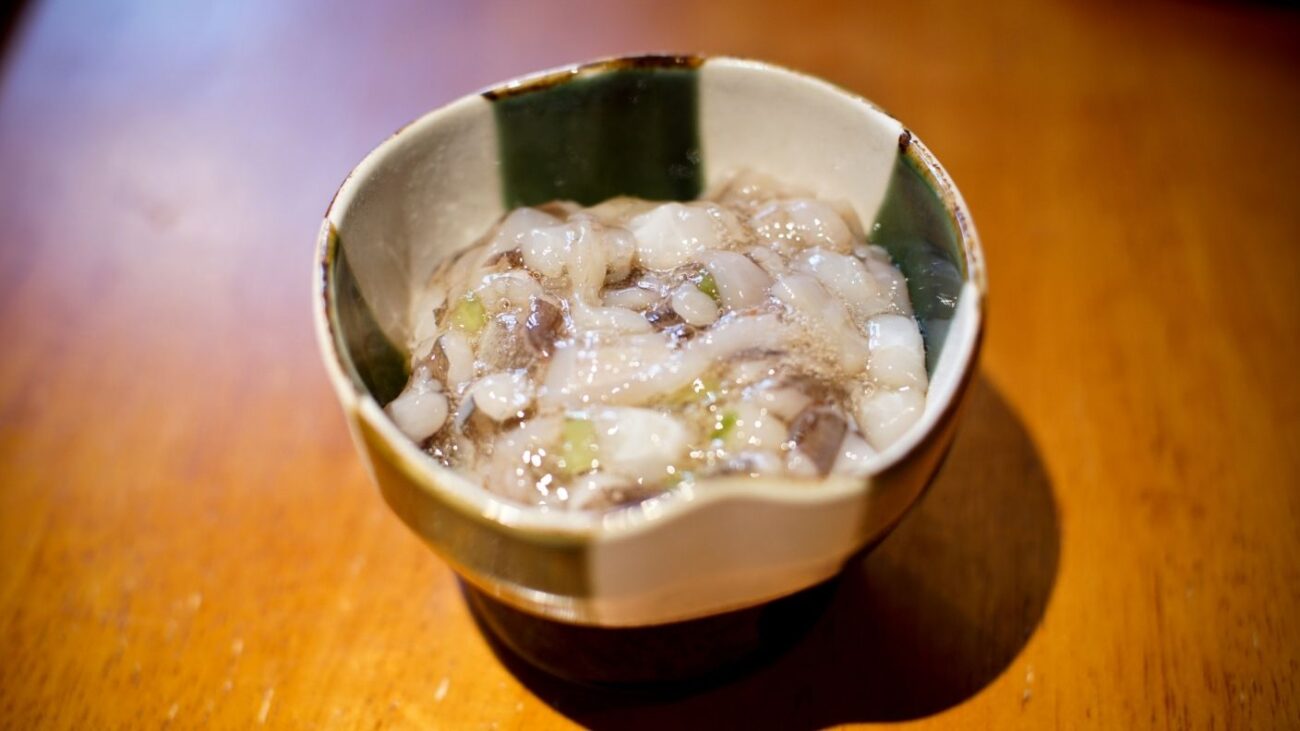
Sannakji is small octopus, freshly cut into pieces and served while the tentacles are still moving from residual nerve activity. It’s plated simply, often with a drizzle of sesame oil and a scattering of sesame seeds, with almost nothing else added to distract from the octopus itself.
The taste is mild and briny, similar to any other raw seafood, but the texture is what people remember, since the suction cups can still grip the inside of the mouth while chewing. Restaurants that serve it are firm about chewing thoroughly, since the movement is muscle reflex rather than any sign the octopus is still alive in a meaningful sense.
Kopi Luwak, Coffee From Civet Droppings
Kopi Luwak starts as ordinary coffee cherries, eaten by the Asian palm civet, a small nocturnal mammal native to Indonesia. The cherries pass through the civet’s digestive system, where enzymes break down some of the proteins in the beans, and the beans are then collected from the animal’s droppings, washed, and roasted like any other coffee.
Drinkers describe the resulting cup as smoother and less bitter than standard coffee, with an earthy, slightly musky note that’s hard to find elsewhere. The high price and animal welfare concerns around civet farming have made ethically sourced, wild-collected versions increasingly hard to verify, which is worth knowing before paying a premium for it.
Witchetty Grub, a Staple of Aboriginal Australian Diets
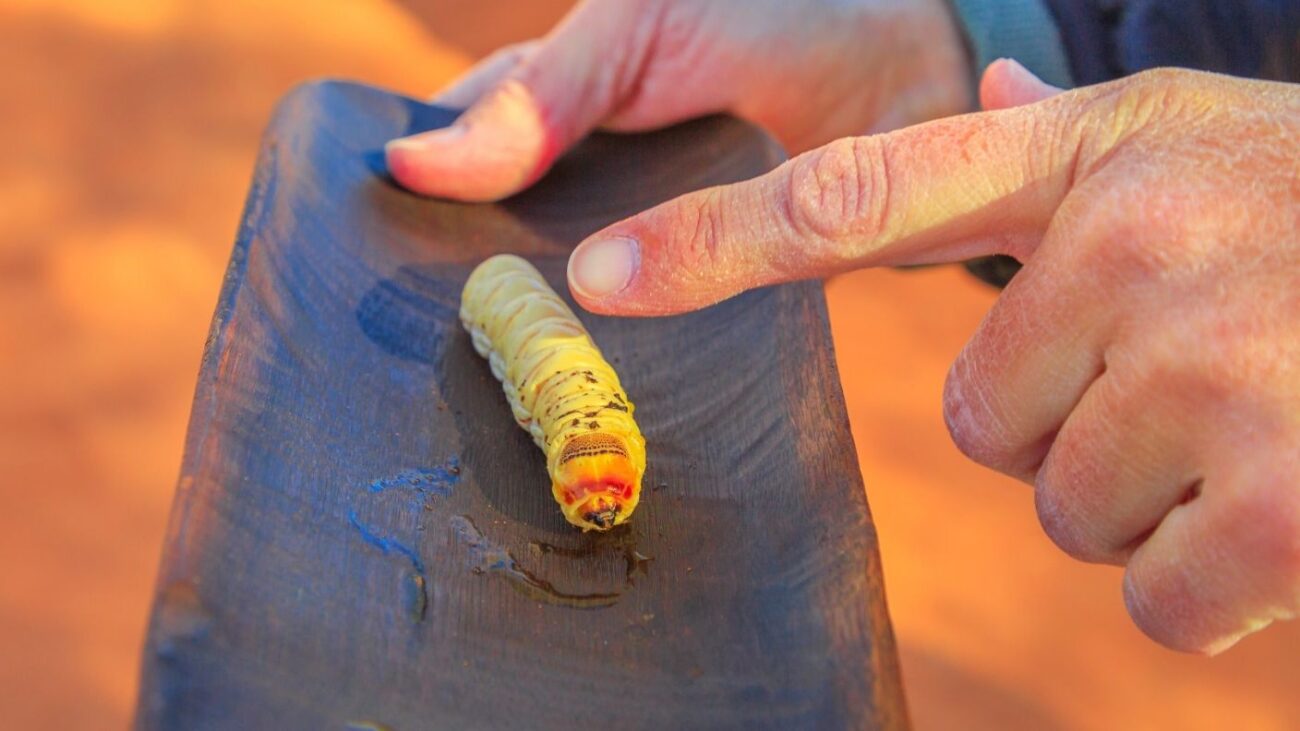
Witchetty grubs are the large, pale larvae of several moth species, traditionally dug out from the roots of witchetty bushes across the Australian outback. They’ve been a reliable source of protein and fat for Aboriginal communities for tens of thousands of years, long before anyone framed them as an unusual food.
Eaten raw, the grub has a texture similar to a soft-boiled egg with a mild, nutty flavor. Cooked briefly over coals, the skin crisps up while the inside stays creamy, and the taste shifts toward something closer to roasted almond or scrambled egg.
RELATED ARTICLE: The American Foods Visitors Can’t Believe Actually Exist
