


Why Does Food Taste Different on an Airplane?

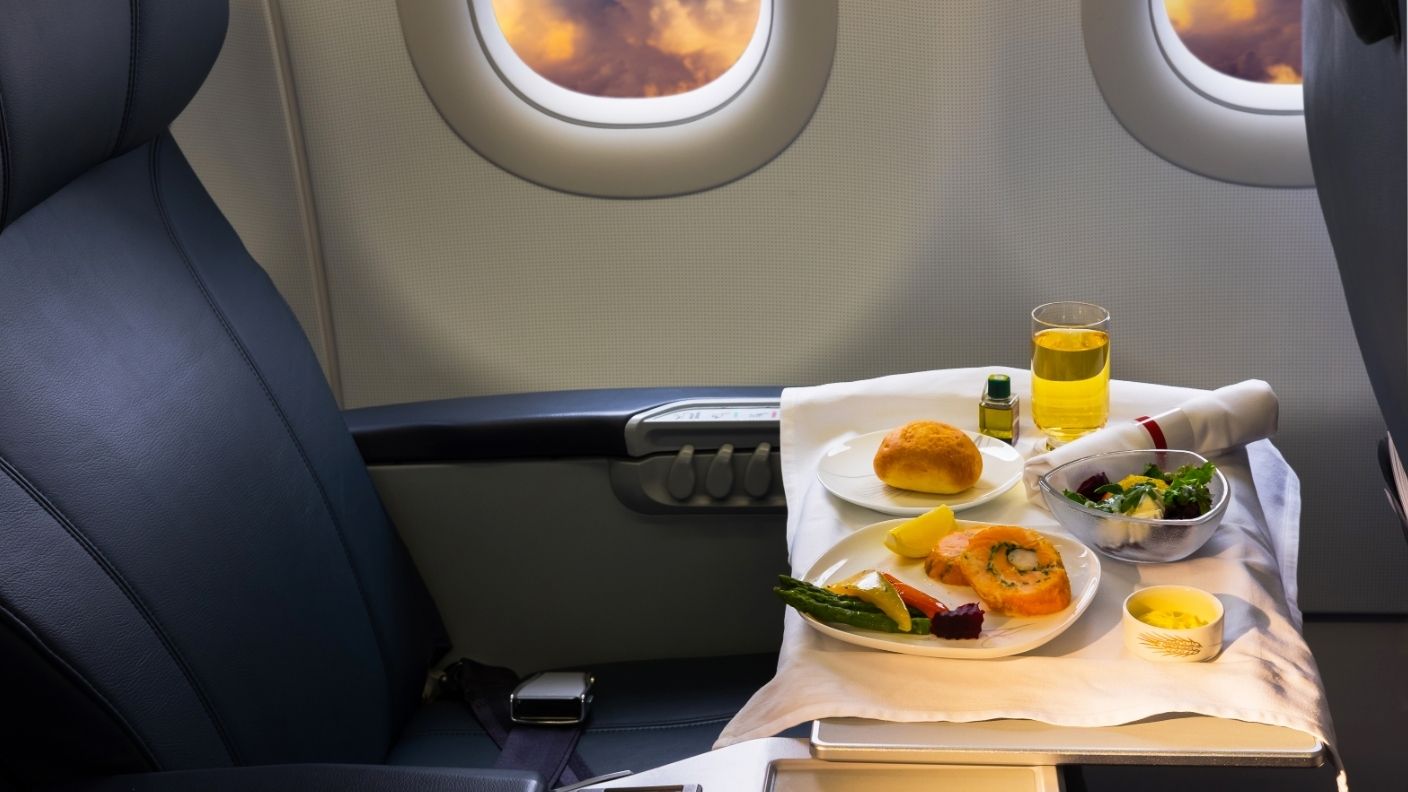

Anyone who has bitten into a sad-looking pasta tray at 35,000 feet and wondered if the airline simply doesn’t care about food has a point, but only a partial one. Engineers, food scientists, and even acoustics researchers have spent real time studying why meals in the sky taste so different from the exact same meals on the ground.
The answers turn out to have almost nothing to do with the chef.
The Cabin Air Is Drying Out Your Sense of Smell
Airplane cabins are kept extremely dry, often below 12 percent humidity, which is closer to the air in a desert than anything found in a home kitchen. That dryness dries out the nasal passages, and since smell accounts for most of what people experience as flavor, a stuffy nose effectively mutes a meal before it even reaches the tongue.
A study commissioned by Lufthansa and carried out by Germany’s Fraunhofer Institute found that this combination of low humidity and altitude reduces how well passengers can smell their food, on top of dulling taste directly. It’s a big part of why airline meals can taste flat even when the ingredients themselves are perfectly fine.
Cabin Pressure Mutes Sweet and Salty Flavors
That same Fraunhofer research found that cabin pressure and dry air together reduce sensitivity to sweet and salty tastes by roughly 30 percent. That’s a big enough drop that a normally well-seasoned dish can come across as noticeably bland by the time it reaches a tray table.
Interestingly, the effect isn’t universal across every flavor. Sour, bitter, and umami tastes stay largely unaffected by altitude, which is part of why some foods hold up far better on a flight than others.
Jet Engine Noise Changes What Tastes Good
Beyond air quality, the constant roar of the engines does its own damage to flavor. Researchers at Cornell tested how people rated sweet, salty, sour, bitter, and umami tastes while exposed to 85 decibels of recorded cabin noise, roughly the volume of a real jet engine.
Sweetness took a real hit under those noisy conditions, while umami grew noticeably stronger, according to food scientist Robin Dando, who led the research. Separate work from Oxford psychologist Charles Spence found a similar pattern, part of what he has called “sonic seasoning.”
Why Tomato Juice Becomes Weirdly Appealing at 30,000 Feet
Tomato juice is loaded with umami, the same savory compound found in broth, cheese, and mushrooms, which helps explain one of aviation’s strangest running jokes. Passengers who would never order tomato juice on the ground routinely ask for it in the air, and airlines have taken notice.
Lufthansa reportedly serves close to 400,000 gallons of tomato juice a year, nearly matching its beer sales, a detail that pushed the airline to investigate why in the first place. Once noise and altitude dull sweetness and boost umami, a glass of tomato juice suddenly makes a lot more sense.
So Is It the Food, or Is It You?
All of this points to an uncomfortable truth for anyone who has complained about a bad in-flight meal: a fair share of the blame belongs to the environment, not the kitchen. The same tray of food would likely taste noticeably better eaten at a table on solid ground.
Some airlines have already started adjusting their menus around this, leaning into umami-heavy dishes and cutting back on delicate, sugar-forward ones that don’t survive the trip. It’s a rare case where the fix for bad-tasting food has almost nothing to do with the recipe itself.
RELATED ARTICLE: The Worst Food Served on Airplanes, According to Frequent Flyers
