


The Grocery Store Foods Nutritionists Say Are Worth Buying More Often


Registered dietitians tend to build their own grocery lists around a handful of practical, unglamorous staples rather than trending superfoods. A few keep showing up again and again when they’re asked what’s actually worth buying more of.
Nut and Seed Butters
Dietitians point to nut and seed butters as an easy way to add plant-based protein to a diet without much effort. Almond, cashew, and sunflower seed butter all work as alternatives for anyone avoiding peanuts specifically.
They’re also shelf-stable, which makes them a practical, budget-friendly staple for anyone watching costs. A spoonful stirred into oatmeal or spread on toast adds real protein without requiring any actual cooking.
Fresh Herbs
Fresh herbs do more than make a plate look finished. Dietitians note that a handful of dill, basil, or parsley adds genuine flavor to a dish, which reduces how much people reach for salt to make food taste interesting.
That flavor boost matters more than it seems. A dish seasoned well with fresh herbs needs less added sodium or sugar to actually taste satisfying.
Leafy Greens
Spinach, kale, and arugula show up on nearly every dietitian’s list of staples worth buying regularly. They’re described as packed with fiber, antioxidants, and vitamins A, C, and K, all in a food that fits into almost any meal.
Their versatility matters as much as the nutrition itself. A handful tossed into a smoothie, a pasta dish, or a sandwich barely changes the meal while still adding real nutritional value.
Frozen Spinach
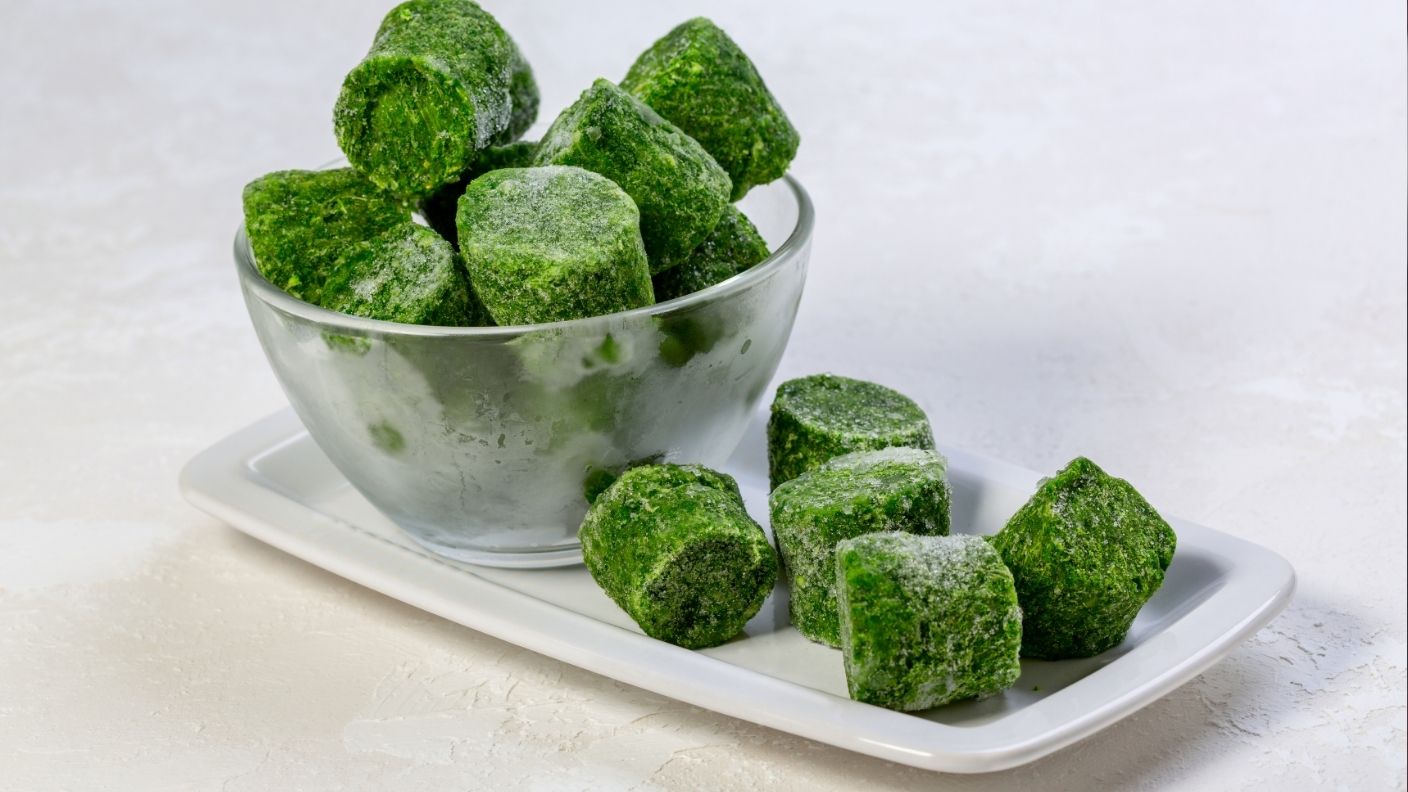
Fresh spinach wilts fast, often going bad within days of being bought. Frozen spinach solves that problem directly, since it’s picked at peak ripeness and flash frozen to lock in nutrients before they have a chance to degrade.
It’s also notably cheaper than fresh spinach for a comparable amount, and it works just as well stirred into pasta, eggs, or a smoothie. Keeping a bag in the freezer means there’s always a vegetable on hand, even on weeks when fresh produce runs out.
Frozen Sliced Sweet Potatoes
Sweet potatoes are rich in vitamin A and complex carbohydrates, and buying them frozen and pre-sliced removes the peeling and chopping that often keeps people from cooking with them regularly. They hold their texture and natural sweetness well even after months in the freezer.
Nutritionists have specifically pointed to them as a healthier stand-in for regular frozen French fries. Roasted straight from frozen, they make an easy side dish with almost no prep time involved.
Fermented Foods
Fermented foods like yogurt, kefir, and sauerkraut are getting more attention from dietitians as a direct way to support gut health rather than just as an occasional add-on. Interest in this category has grown enough that some nutrition experts expect it to move from a niche trend into a genuine kitchen staple.
Working even one fermented food into a regular rotation, whether that’s a daily yogurt or a spoonful of sauerkraut alongside dinner, is a low-effort way to support digestion consistently rather than occasionally.
RELATED ARTICLE: Top 6 Yogurt Substitutes in Naan (Recipe Included!)
