


The German Way to Make Potato Salad, With One Secret Ingredient

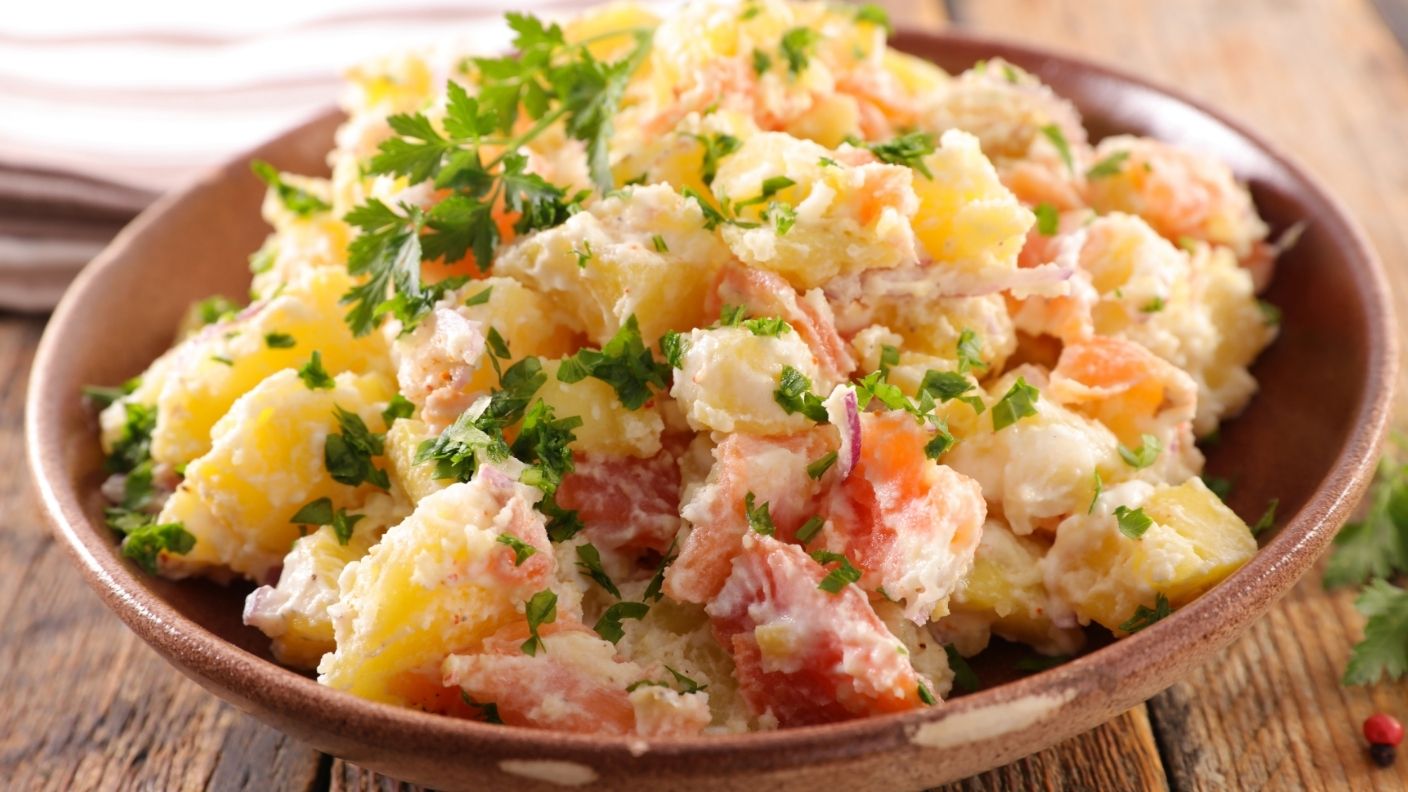

Ask most people to picture potato salad and they’ll describe something creamy, cold, and held together with a thick layer of mayonnaise. Germany’s version looks almost nothing like that, and the reason comes down to a single step most home cooks skip entirely.
No Mayo Anywhere in Sight
Traditional German potato salad, especially the style found across Bavaria and southern Germany, contains no mayonnaise at all. The dressing is built instead from vinegar, oil, and a touch of mustard, which keeps the whole dish lighter and noticeably less rich.
That absence changes more than just the calorie count. Without mayo to mask things, every other flavor in the bowl has to actually pull its weight, which is exactly why the technique behind it matters so much.
The Secret Is Poured, Not Mixed In
The ingredient doing the real work here is hot broth, beef or vegetable, poured directly over the warm, sliced potatoes before anything else touches them. It sounds like an odd first step, but it’s the entire foundation of the dish.
Instead of getting coated in dressing from the outside, the potatoes absorb liquid from the inside, soaking up flavor all the way through. That’s the difference between a potato salad that tastes seasoned on the surface and one that tastes seasoned in every bite.
The Potatoes Have to Still Be Warm
Timing matters as much as the broth itself. The potatoes get peeled and sliced while they’re still hot from boiling, since warm potato flesh absorbs liquid far more readily than potatoes that have already cooled down.
Waiting even twenty minutes too long before pouring the broth noticeably changes the result, leaving the inside of each slice bland no matter how flavorful the broth was. It’s a small window, but it’s the one part of the process worth actually paying attention to.
Vinegar Does the Work Mayo Usually Does
Once the potatoes have soaked up the broth, a mixture of vinegar, a little sugar, mustard, and oil gets folded in to build the actual dressing. White vinegar is the standard choice, sharp enough to cut through the richness of the broth without overwhelming it.
The oil goes in last and only after everything else has had time to sit, since adding it too early coats the potatoes and blocks them from absorbing anything further. That order isn’t a formality, it’s the difference between a salad that tastes flat and one that tastes balanced all the way through.
Patience Matters More Than Technique
Nothing about this recipe rewards rushing. The salad needs to rest at room temperature for at least an hour after the broth goes in, giving the potatoes time to fully take on that flavor before the vinegar dressing arrives.
Left to sit even longer, ideally overnight, the whole dish only improves. It’s one of the rare recipes that genuinely tastes better the next day, which makes it a strong candidate for anyone cooking ahead of a gathering.
Bacon Is Optional, But Traditional
Many regional versions add crisped bacon and onions cooked in the rendered fat before the broth ever goes into the pot, layering in a smoky depth that plain vinegar and oil can’t provide on their own. It’s not universal, but it shows up often enough to count as a common variation.
Whether or not bacon makes an appearance, the fundamental method stays the same. It’s the broth-soaking step, not any single add-in, that actually defines the dish and separates it from every mayo-based version sitting at a summer cookout.
RELATED ARTICLE: Why You Shouldn’t Cook With Fresh Tomatoes, According to Chefs
