


What to Eat in Morocco: A Traveler’s Culinary Bucket List

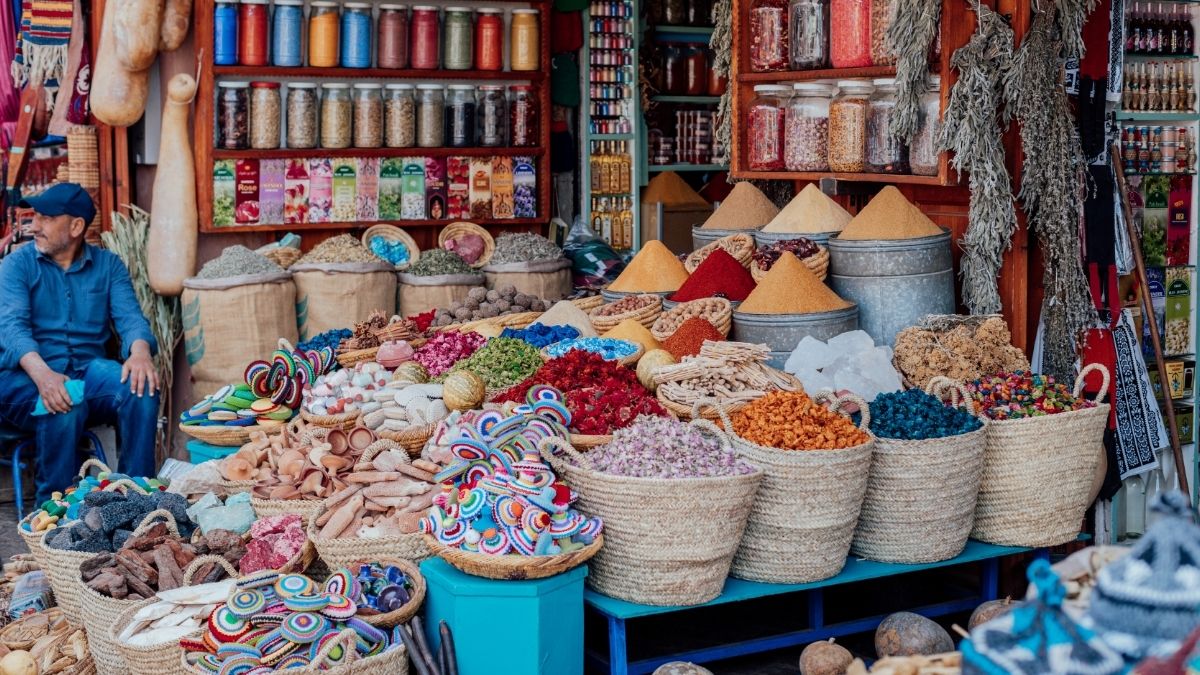

Morocco does not ease you in gently. From the moment you step off the plane, the smell of cumin, saffron, and charcoal-grilled meat hits you like a warm wall, and suddenly every plan you had feels less important than finding something to eat.
This is a country where food is inseparable from culture, hospitality, and daily life. And if you do not know where to start, this guide is your map.
Tagine
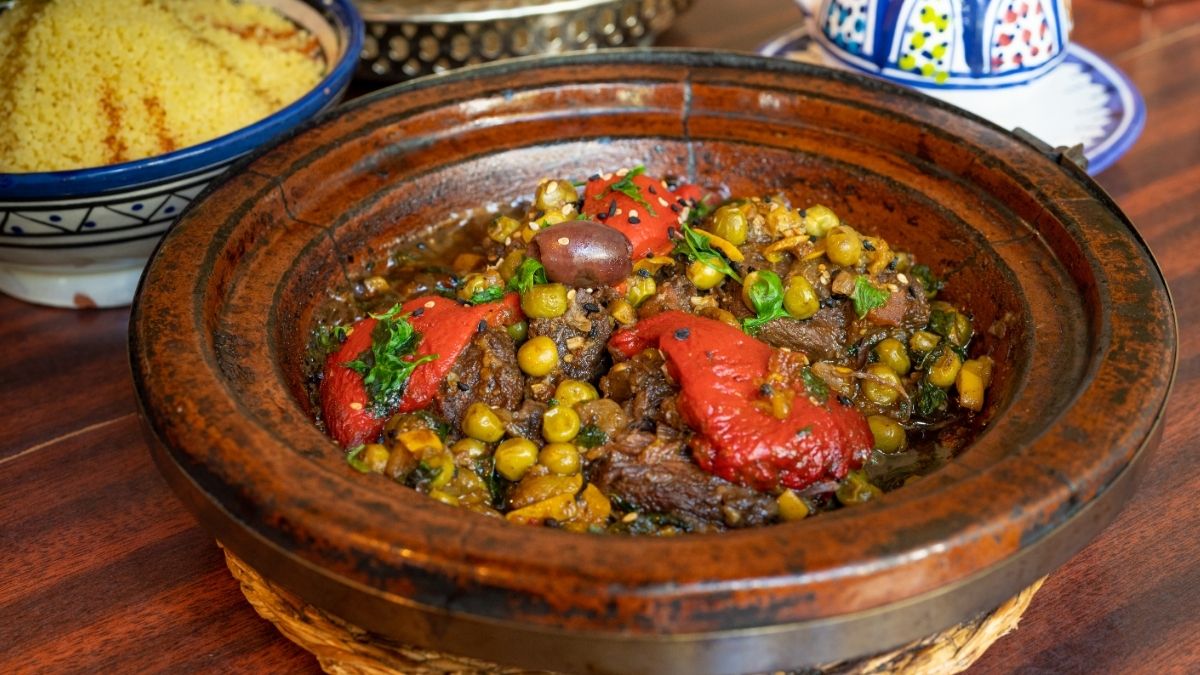
This is the dish that defines Morocco, and for good reason. Tagine is a slow-cooked stew named after the conical clay pot it is cooked in, and the shape of that lid is not just aesthetic. It captures steam and drips it back into the dish, keeping every morsel impossibly tender without wasting a drop of water.
The classic versions are chicken with preserved lemon and olives, lamb with prunes, and kefta meatballs nestled in a zesty tomato sauce with eggs.
Café Clock in Marrakech is beloved for its modern take on tagine, while family-run riads in the medina offer the most traditional experience.
For something truly unforgettable, Dar Hatim in Fez serves a special lamb tagine in what was once a private family home.
Couscous
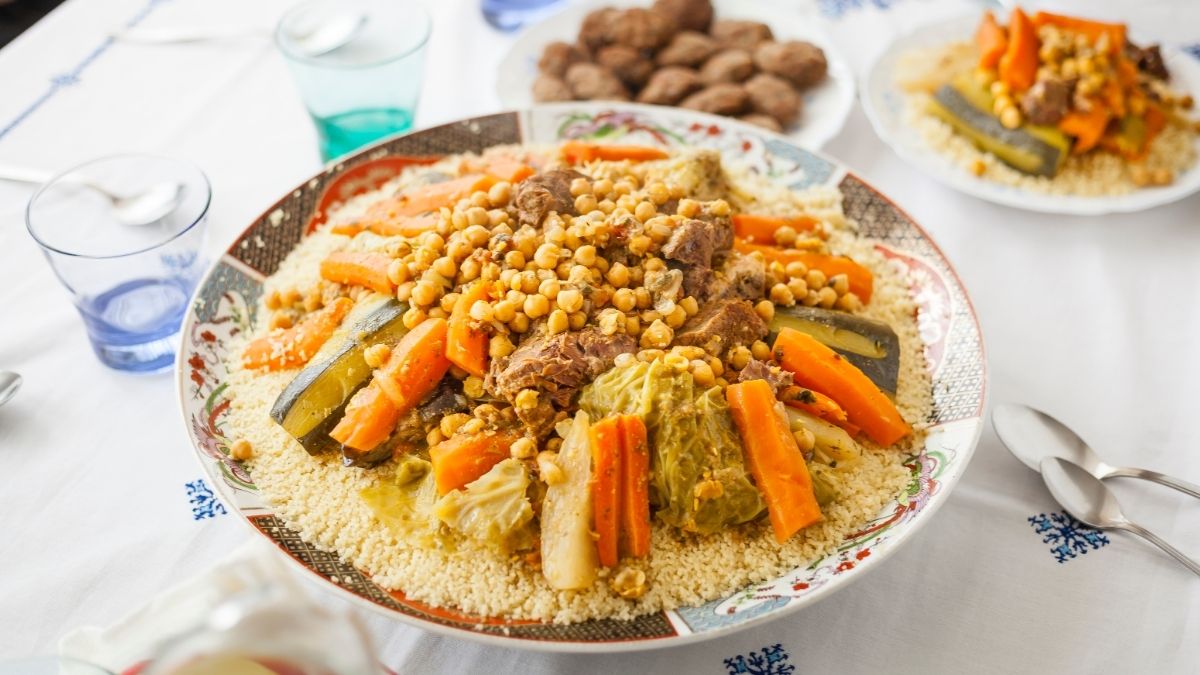
Couscous is Morocco’s national dish, and it is far more than a side. Hand-rolled semolina is steamed multiple times until each grain is light and fluffy, then served over a rich stew of slow-cooked meat and vegetables, often crowned with tfaya, a sweet caramelized onion and raisin mixture.
Couscous is traditionally eaten on Fridays after prayers, when families gather around a communal platter across the country.
If you want to experience it at its most authentic, La Maison Bleue in Fez is a historic riad that serves a beautiful Friday couscous. Wanderlog reviewers consistently describe the couscous at local Marrakech restaurants as extraordinary, with one guest calling it the best they had ever tasted.
Pastilla
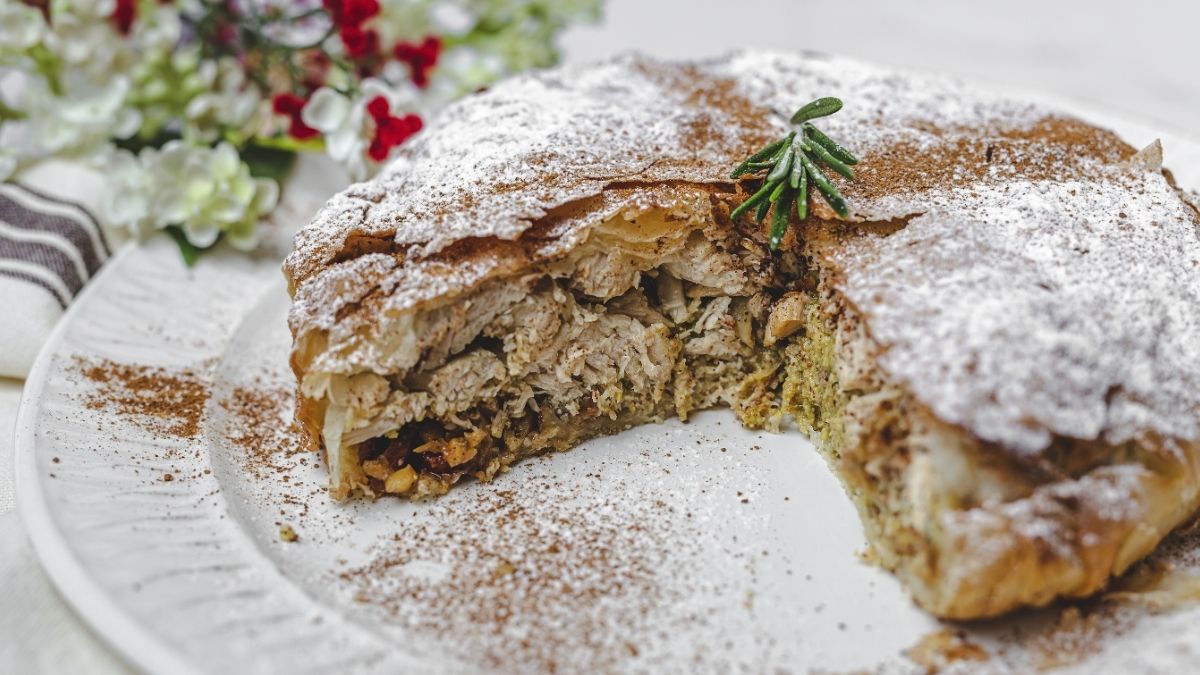
On paper, this sounds like a mistake. Shredded pigeon or chicken, spiced scrambled eggs, almonds, cinnamon, and powdered sugar, all wrapped in paper-thin warqa pastry and baked until golden. In practice, it is one of the most extraordinary things you will eat in your life.
Pastilla originated in Fez with roots in Andalusian cooking, brought to Morocco by the Moors, and the city still makes the finest version.
Dar Roummana in Fez serves the classic pigeon pastilla in a stunning setting, while La Sqala in Casablanca offers a seafood twist for coastal flair. At Fez & Friends, a beloved local restaurant, bloggers rave about the vegetable bastilla as tasty and generously portioned at a genuinely honest price.
Harira
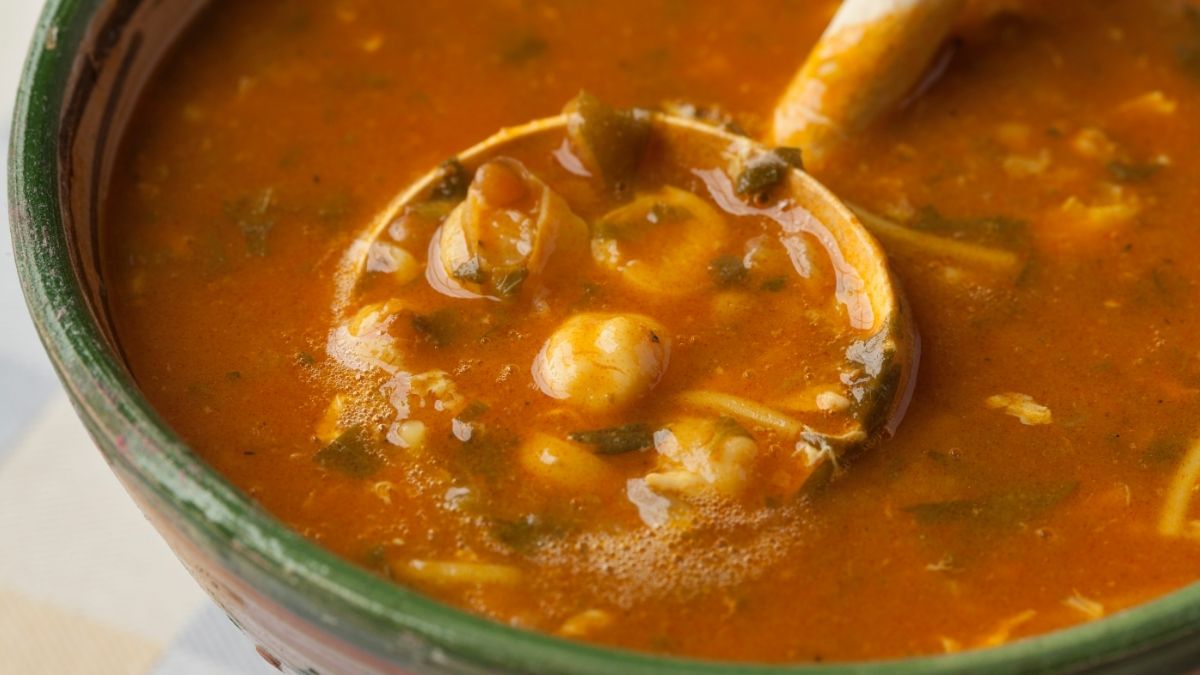
This is Morocco’s soul in a bowl. Harira is a thick, nourishing soup made with tomatoes, lentils, chickpeas, fresh herbs, and sometimes lamb, silky smooth with a warmth that builds slowly and lingers. It is tied to religious tradition and is the dish most Moroccan families break their fast with during Ramadan.
Jemaa el-Fna square in Marrakech transforms into an outdoor cathedral of harira at night, with smoke-blackened carts run by families who have held their numbered pitch for generations.
For a sit-down version, local eateries in Fez are praised for their hearty, deeply spiced renditions. A TripAdvisor reviewer at Restaurant Buoayad near Fez’s Blue Gate described the harira as delicious and the entire meal as outstanding value for money.
Mechoui
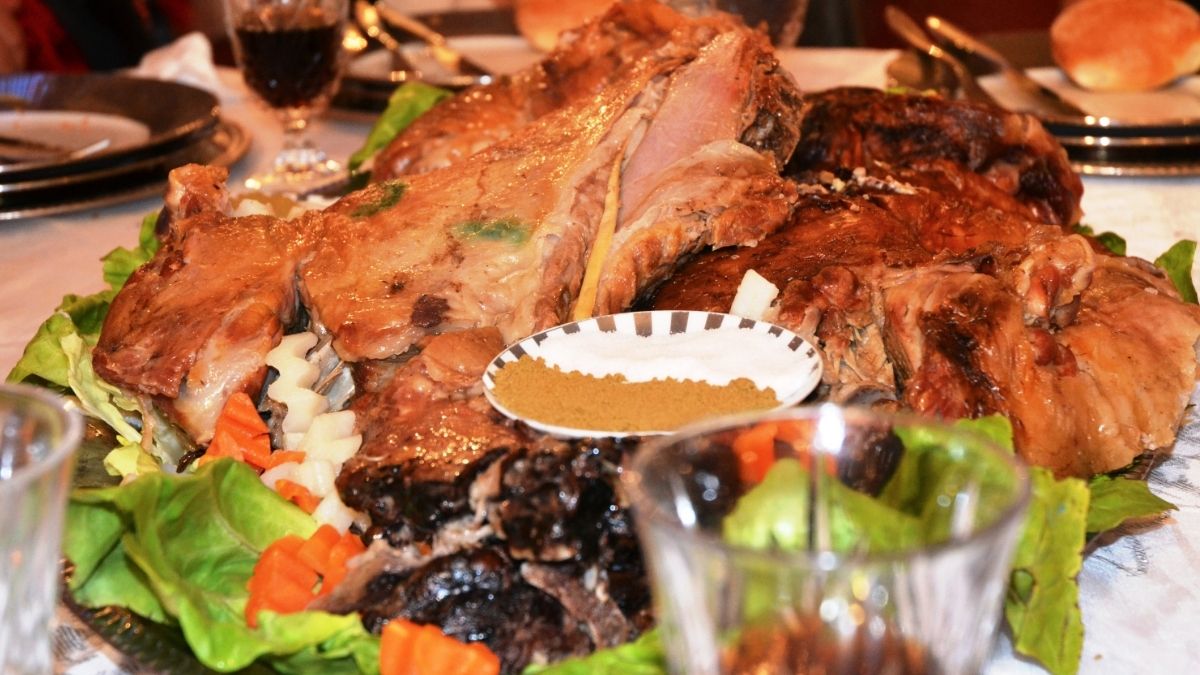
There is a tucked-away row of stalls just off Jemaa el-Fna called Mechoui Alley, and it serves one thing only. Whole lamb is slow-roasted overnight in underground clay pits, then sold by weight from the early morning until it sells out, usually by early afternoon. You eat it with nothing but salt, cumin, and bread.
Intrepid Travel calls Mechoui Alley a Marrakech essential, noting that the succulent meat needs no adornment whatsoever.
On TripAdvisor, the reviews read like love letters. One traveler called it one of the most memorable meals of their life, describing lamb roasted for hours in a stone pit, eaten with bread and mint tea while seated elbow-to-elbow with locals. Arrive before noon, or you will find only empty pots.
Kefta Brochettes
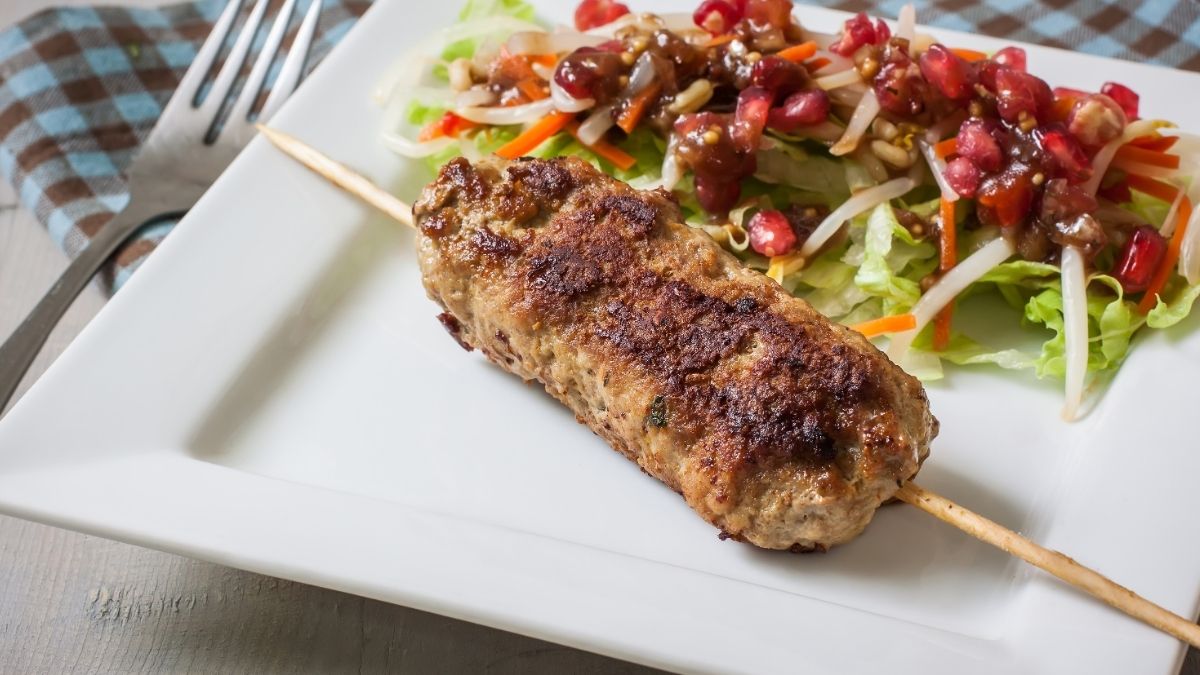
On practically every street corner in Morocco, you will find a cloud of charcoal smoke drifting from a grill. Kefta brochettes are spiced ground lamb or beef, shaped onto flat skewers and cooked directly over the coals, served with khobz flatbread, harissa, and a dish of salt and cumin.
Djemaa el-Fna in Marrakech is the most famous setting for brochettes, according to Lonely Planet, with street food stalls stretching as far as the eye can see. Bab Boujloud in Fez is another brilliant spot, surrounded by local food stalls that feel a world away from anything tourist-facing. The key is to follow the smoke, and eat where the locals are already queuing.
Msemen
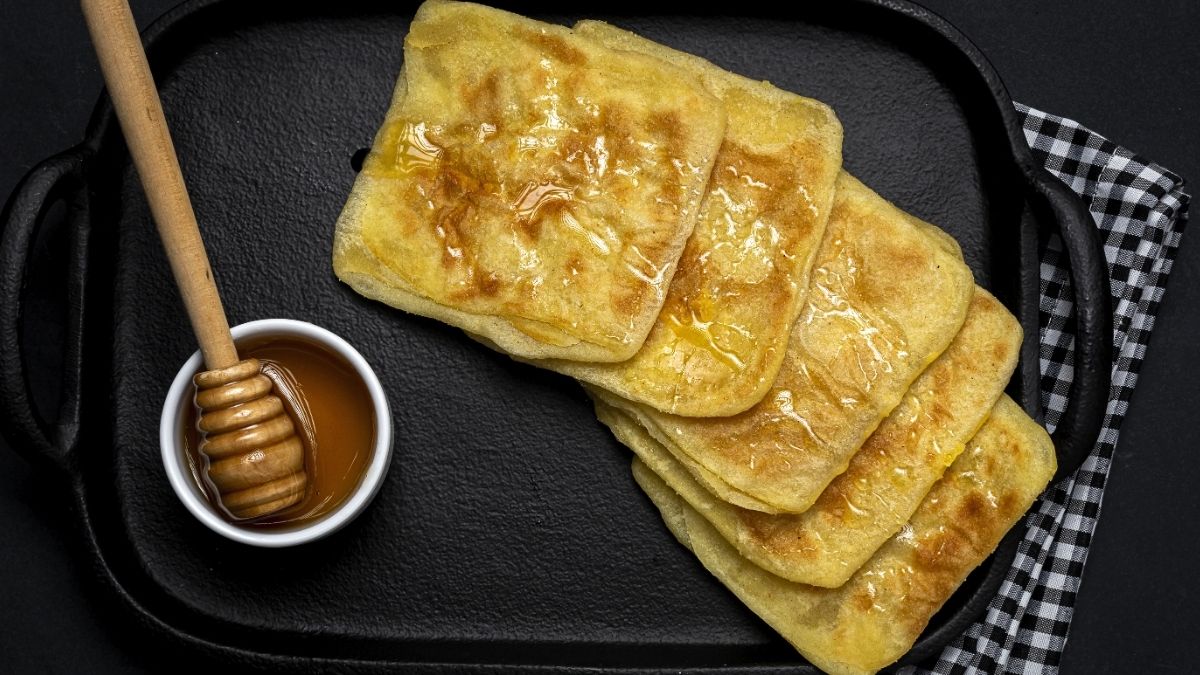
Breakfast in Morocco often begins with a pile of these, and once you have tried one fresh off the griddle, you will understand why.
Msemen is a flaky, layered flatbread made by folding butter and semolina into the dough and slapping it against a hot metal surface until it puffs and crisps at the edges. It is served sweet with honey and argan oil, or savory stuffed with spiced herbs and onions.
Intrepid Travel describes the rhythmic slapping sound of dough being worked against the griddle as the best way to identify a skilled msemen vendor in any market. The combination of fresh msemen and a glass of Moroccan mint tea for breakfast is, simply, one of the most satisfying ways to start a day anywhere in the world.
Sfenj
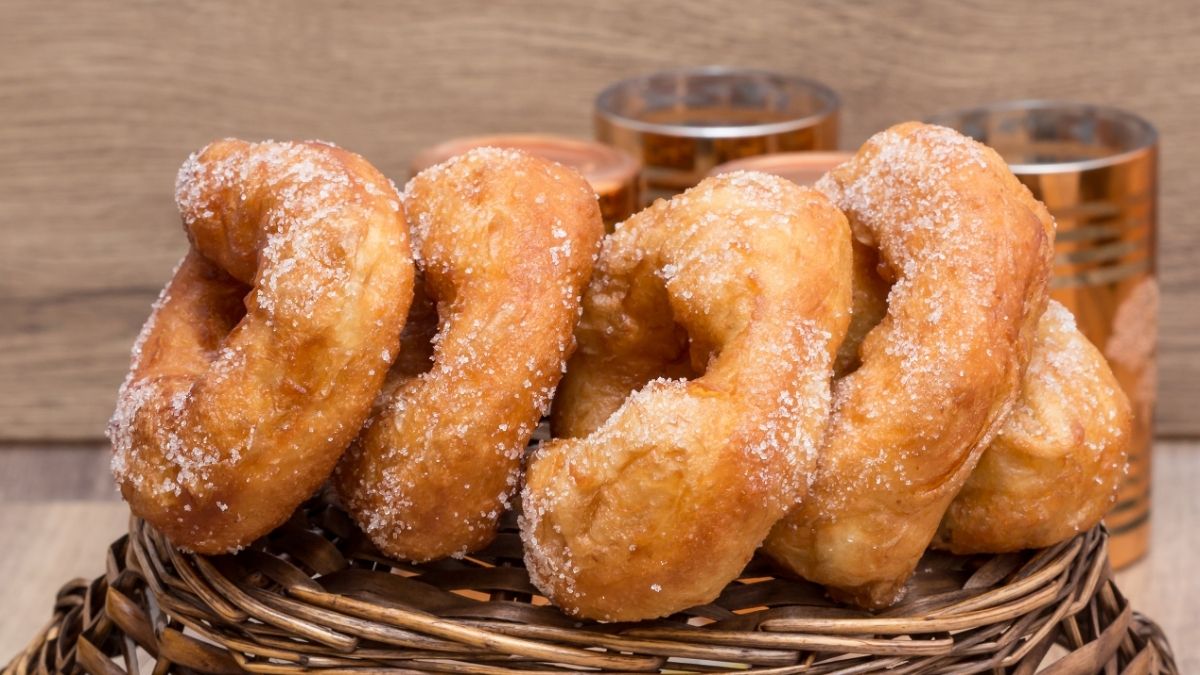
These are Morocco’s answer to the doughnut, but calling them that does not quite do them justice. Sfenj is a chewy, deep-fried ring of dough that is mildly sweet, served warm from the fryer at street stalls across every city.
Vendors thread them onto a strand of palm leaf and sell them in clusters, dusted with a little sugar or drizzled with honey.
You will find sfenj vendors near morning markets in Marrakech, Fez, and Casablanca, usually surrounded by a faithful crowd of locals picking up their breakfast before the day starts properly. They are best eaten hot, immediately, standing up, with nothing else required.
Moroccan Mint Tea
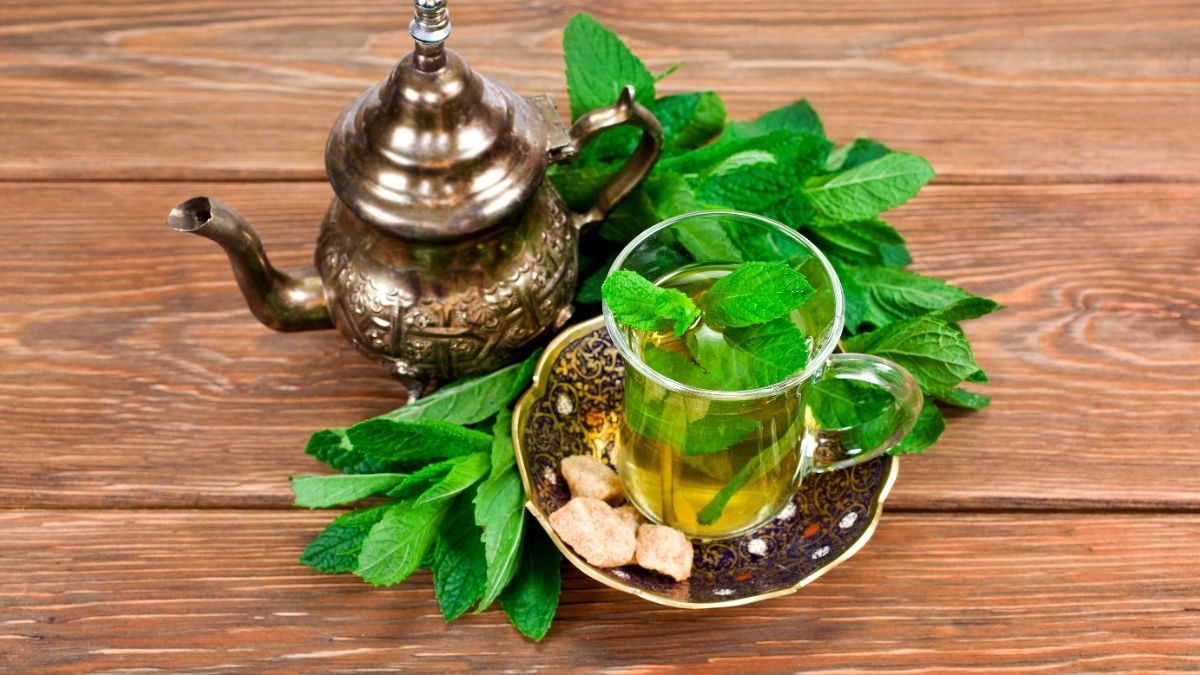
No meal in Morocco ends without it, and in many cases, no conversation begins without it either. Moroccan mint tea is made with gunpowder green tea, a generous handful of fresh spearmint, and enough sugar to make it genuinely sweet, then poured from a great height into small glasses to create a frothy top.
The pouring is not showmanship. It aerates the tea and improves the flavor.
Accepting a glass of mint tea is a gesture of hospitality, and refusing one is considered impolite. Travel writers and food lovers consistently describe sitting on a rooftop terrace in Jemaa el-Fna with a glass of tea as one of Morocco’s defining experiences.
The best version you will taste is probably not in a restaurant. It will be in someone’s home, poured by someone who is genuinely glad you are there.
Morocco rewards the traveler who slows down, follows the smoke, and says yes to whatever is being offered. The food alone is reason enough to go.
