


Smoothies vs. Eggs for Breakfast — One of Them Is Quietly Letting You Down

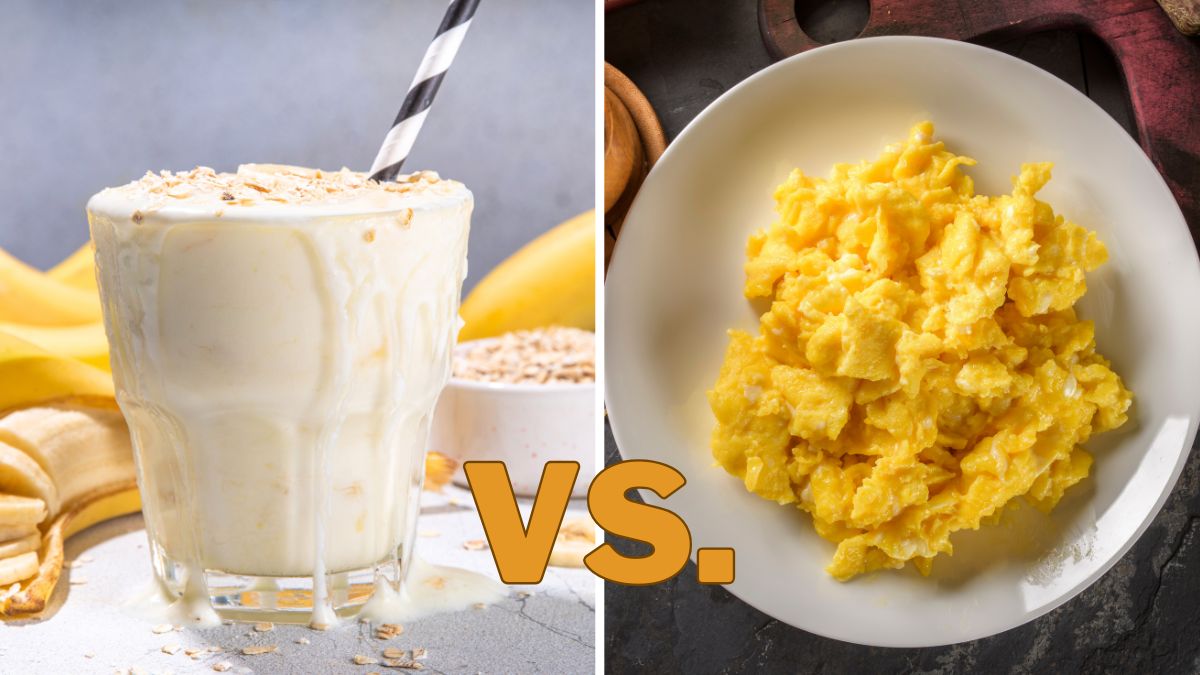

Both feel like a healthy morning win. One is colorful, cold, and comes with a satisfying blend sound. The other is warm, simple, and has been on breakfast plates for generations.
But when it comes to what your body actually needs in the morning, smoothies and eggs are playing very different games, and the one you think is healthier might be the one holding you back.
The Smoothie Trap Most People Fall Into
Smoothies have a wellness halo that is almost impossible to argue with, and to be fair, a well-built one genuinely earns it. Green smoothies retain the beneficial fiber content from whole foods, unlike juices, making them a genuinely useful way to sneak in more fruits and vegetables.
The problem is most smoothies are not well-built. A made-to-order smoothie from popular smoothie shops can contain over 100 grams of carbs and up to 90 grams of sugar, with barely any protein to steady the ride. That sets off a blood sugar spike, followed by a crash, followed by hunger long before lunch.
What Eggs Are Actually Doing for You
Eggs are having a serious moment in nutrition science, and it is well deserved. The newly released 2025–2030 Dietary Guidelines for Americans specifically recommend eggs as a high-quality complete protein, meaning they contain all nine essential amino acids the body needs.
There is also the brain angle, which barely gets talked about. Eggs are one of the best dietary sources of choline, a nutrient that supports cognitive health, memory, and learning, and most Americans are not getting nearly enough of it.
The Fullness Factor Is Not Even Close
This is where eggs genuinely pull ahead for most people. A study found that energy intake was significantly reduced at lunch after an egg-based breakfast compared to a cereal-based one, and hunger returned more slowly after eating eggs.
A smoothie without enough protein and fat, on the other hand, can leave you hungry again within an hour or two, which tends to unravel any healthy intentions the rest of the morning had going for it.
How to Make a Smoothie Actually Work
A smoothie is not the enemy, but the construction matters enormously. Registered dietitians agree that a balanced smoothie needs three non-negotiables to function as a real meal: fiber, a protein source, and healthy fat.
Even a smoothie overflowing with healthy ingredients can still spike blood sugar if portions are too large or the balance of ingredients is off. Getting it right takes more thought than most morning routines allow.
At the end of the day, eggs win on protein, satiety, and nutritional depth in a way that is hard to argue with. Smoothies can absolutely hold their own, but only when they are built like a meal and not like a dessert in disguise. If your mornings feel rushed and your mid-morning hunger hits hard, it might be time to let the blender take a day off.
RELATED ARTICLE: The #1 Breakfast Women Over 50 Should Eat More Often
