


The Secret to Making Vegetables Taste Amazing the Mediterranean Way

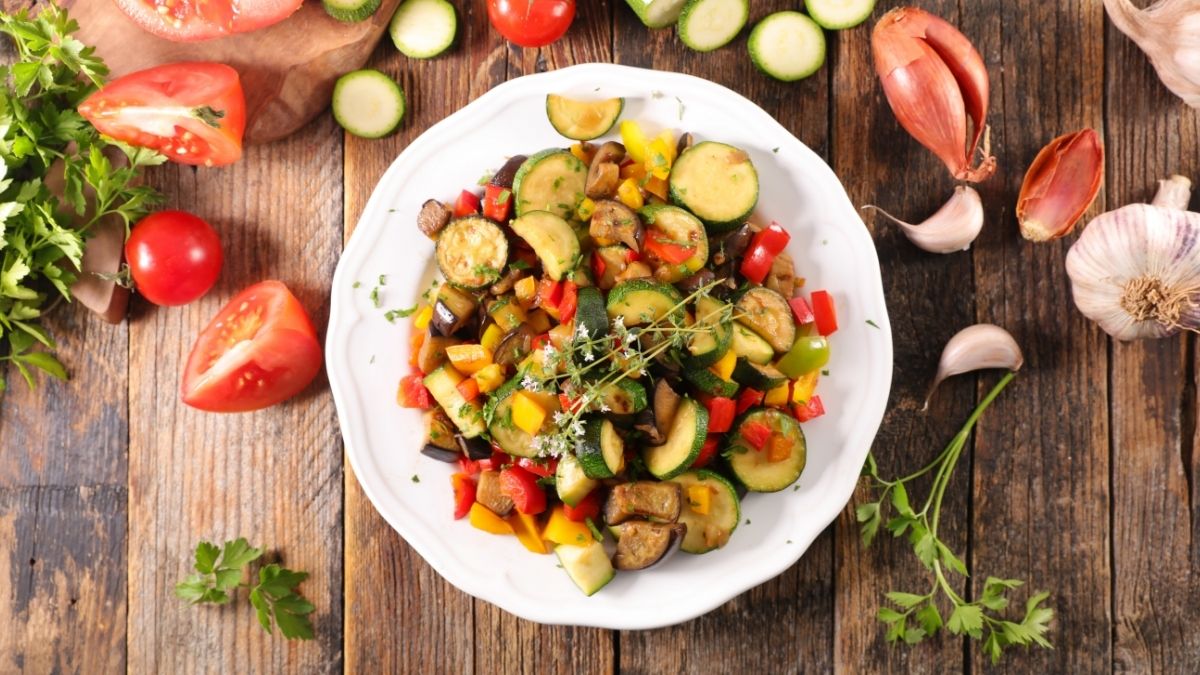

Most people who claim they do not like vegetables have never had them cooked the Mediterranean way. Not steamed into submission. Not boiled to grey. Not tossed with low-fat dressing and called a salad.
There is a specific approach used across Greek, Italian, and Spanish kitchens that transforms ordinary produce into something rich, deeply flavored, and genuinely satisfying, and the technique is both older and simpler than anything trending on food social media right now.
The Greek Word You Need to Know
The concept is called ladera, a Greek word meaning simply “in oil,” and it describes an entire category of cooking where vegetables are slow-cooked in generous amounts of extra virgin olive oil alongside tomatoes, garlic, onions, and fresh herbs. Ladera dishes are not side dishes in Greece.
They are the meal, served warm or at room temperature with crusty bread to soak up the leftover oil in the pan.
The philosophy is straightforward: olive oil is not a cooking medium here, it is the sauce, and it transforms everything it touches.
Why the Oil Amount Actually Matters
This is where most home cooks go wrong. They add a cautious drizzle of oil and wonder why their vegetables taste flat.
Mediterranean cooking uses far more olive oil than the American kitchen is comfortable with, and that generosity is not indulgence.
Vegetables cooked in copious EVOO absorb its richness, its polyphenols, and its flavor in a way that simply does not happen with a tablespoon. The oil becomes a flavor vehicle that penetrates every layer of the vegetable as it cooks.
Extra virgin olive oil also increases the bioavailability of fat-soluble vitamins and antioxidants in vegetables, meaning the dish is not just more delicious but more nutritious than the same vegetables cooked without it.
High Heat Is the Other Half of the Secret
For roasted preparations, the Mediterranean approach demands a properly hot oven. Roasting at 400 to 425 degrees Fahrenheit caramelizes the natural sugars in vegetables, creating the golden edges and concentrated sweetness that make them taste nothing like their boiled counterparts.
Anything lower and the vegetables steam in their own moisture rather than brown.
Crowding the pan is the single most common mistake that prevents caramelization. Vegetables need space around them for heat to circulate. One layer, never more.
The Lemon Rule at the Finish
One detail separates a good Mediterranean vegetable dish from a great one. A splash of lemon juice added after roasting brightens the entire dish, cutting through the richness of the oil and lifting every flavor underneath it.
Fresh herbs are added at this same final moment, preserving their volatile aromatic compounds rather than burning them off in the oven.
The Dish That Started Generations of Converts
The most iconic ladera dish is briam, the Greek equivalent of ratatouille, built from zucchini, eggplant, potatoes, tomatoes, and onions slow-roasted together in olive oil with garlic, parsley, and oregano.
Briam tastes even better the day after cooking as the vegetables continue to absorb the olive oil and herb flavors overnight, a characteristic shared by almost every ladera dish in the Greek tradition.
It is a method that has been feeding people for centuries across the Mediterranean, requiring no special equipment, no complicated technique, and no expensive ingredients. Just quality olive oil, seasonal vegetables, and the patience to let the heat do what it has always done.
